Archive for August, 2006|Monthly archive page
Rising Nicotine Levels
 Leave a comment
From the Seattle Post-Intelligencer: U.S. report: More nicotine in cigarettes
The level of nicotine that smokers typically consume per cigarette has risen about 10 percent in the past six years, making it harder to quit and easier to get hooked, according to a new report released Tuesday by the Massachusetts Department of Health.
The study shows a steady climb in the amount of nicotine delivered to the lungs of smokers regardless of brand, with overall nicotine yields increasing by about 10 percent.
Massachusetts is one of three states to require tobacco companies to submit information about nicotine testing according to its specifications and the only state with data going back to 1998.
This is pretty interesting, and — on the face of it — pretty damning. It looks like tobacco companies are doing something to increase the amount of nicotine per cigarette smoked. There would seem to be two ways to do that: either increase the amount of nicotine in each cigarette, or find ways (through marketing?) to shift consumers away from lower-nicotine products to ones higher-nicotine ones that are already in stores. This news story doesn’t provide any information on the exact mechanism, here. Either way, it’s bad news, and certainly looks like discreditable behaviour on the part of these companies.
I doubt this issue is limited to Massachusetts.
I wonder if this is an issue where labelling would make any difference. Don’t know about in the US, but here in Canada tobacco companies are required to list nicotine levels on cigarette packs. I just looked at one package. It said, “Nicotine: 1.2-2.4 mg.” Not very informative. First, the range is huge: is the actual level 1.2 mg, or double that? Secondly, how does that compare to other brands? If I were a smoker, and if I cared about nicotine (maybe — just maybe — I’d rather not become toooo addicted) how would I even know if “1.2-2.4 mg” is a lot or not? I suppose I could comparison shop. But if I found a brand that said “Nicotine: 0.8-2.6 mg,” would that be better, or worse, and how would those numbers translate into something I care about?
One last question: how much attention should we pay to the safety characteristics of inherently un-safe products, and the information companies provide about that?
Relevant Books & Movies:
Smokescreen: The Truth Behind the Tobacco Industry Cover-Up
Assuming the Risk : The Mavericks, the Lawyers, and the Whistle-Blowers Who Beat Big Tobacco
The Insider
Whistleblower Uses YouTube to Slam Lockheed Martin, US Coastguard

Whistleblowing, meet modern media. Modern media, meet whistleblowing.
Michael De Kort, an engineer who worked for Lockheed Martin on a major project for the US Coastguard, has found an unusual way to make public his concerns about that project: he posted them to the popular video-sharing website, YouTube.com.
The story of De Kort’s video broke this morning in an item from the Washington Post: On YouTube, Charges of Security Flaws
…the video describes what De Kort says are blind spots in the ship’s security cameras, equipment that malfunctions in cold weather and other problems. “It may be very hard for you to believe that our government and the largest defense contractor in the world [are] capable of such alarming incompetence and can make ethical compromises as glaring as what I am going to describe.”
You can see the full video at news website The Raw Story: VIDEO: Whistleblower uses YouTube to tell his story
Whistleblowing is a touchy matter. According to one fairly typical definition, “Whistleblowing occurs when a member of an organization goes outside of the normal lines of authority in order to accuse the organization (or key personnel) of wrongdoing.” (Frederick Elliston, “Anonymity and Whistle-Blowing”, J. Bus. Ethics, 1(3): 167-177.) On the face of it, whistleblowing involves disloyalty — however well-meaning — to one’s institution. So it requires justification. When is whistleblowing justified? One influential account was offered by Richard De George (De George’s account can be found in his book, Business Ethics, or an earlier article, “Ethical Responsibilites of Engineers in Large Organizations,” in aBusiness & Professional Ethics Journal, 1(1), 1-14). According to De George (roughly) whistleblowing is justified if:
- 1. Serious harm is involved;
- 2. The whistleblower has already expressed his or her concerns to his/her immediate superior;
- 3. The whistleblower has exhausted other channels within the organization;
De George further suggested that blowing the whistle might be not merely justified, but morally required, if 2 additional criteria are met:
- 4. The whistleblower has convincing, documented evidence;
- 5. The whistleblower has good reason to believe that going public will actually bring about change, and thereby prevent serious harm.
Criterion #3 is pretty crucial. It’s not fair to go public if one hasn’t already at least tried to solve the problem via internal channels, hasn’t given the organization a chance to make things right. In the present case…
De Kort said he tried to alert the chain of command at the Coast Guard and at Lockheed about the problems but was rebuffed by supervisors who told him to keep quiet because the program was behind schedule and over budget. De Kort was eventually transferred off the project, and he was laid off earlier this month
Has De Kort’s tactic been effective? According to the Post…
The video also has caught the eye of people in high places. De Kort’s video has been covered by defense trade magazines, and yesterday, Rep. Bennie Thompson (D-Miss.), ranking Democrat on the Homeland Security Committee, wrote a letter to the Coast Guard asking for an answer to De Kort’s “extremely distressing” allegations.
[Thanks to Will Buschert for the tip.]
Wal-Mart News Website

Here’s one for those of you with an abiding interest in Wal-Mart (love ’em, hate ’em, whatever.)
Walmart.nwanews.com features recent news about Wal-Mart from a handful of newspapers in northwest Arkansas (where Wal-Mart is based).
As a sample, among the headlines currently listed (and hotlinked):
“Wal-Mart sets alliance with gay business group”
“Wal-Mart will sell Plan B when pill’s packaging set”
“Wal-Mart takes sustainable strides”
“Chinese Wal-Mart goes Red”
This site is a veritable treasure-trove for researchers, journalists, and teachers.
[Thanks to Jim Gaa for bringing this to my attention.]
Sharesleuth: Profiting from Revealing Shady Business Practices

Here’s something weird & controversial.
The Sharesleuth.com website is a collaboration of billionaire entrepreneur Mark Cuban [Wiki-Warning] and journalist Chris Carey. The site bills itself as “an independent Web-based reporting aimed at exposing securities fraud and corporate chicanery.”
From the website:
More than 13,000 companies are listed on U.S. stock exchanges. Analysts for brokerages and independent research firms track fewer than half of them. Overburdened examiners at the Securities and Exchange Commission review only a fraction of the filings that come their way.
If you’ve spent any time digging through muck and rot in the lower reaches of the stock market, you know that many investment opportunities are not what they seem, and that some companies are the creation of predators and pretenders.
Sharesleuth.com aims to create a new line of defense by using investigative journalism techniques and a worldwide network of amateur and professional stock detectives to identify suspect companies.
So far, so good, right? Sharesleuth aims to shine the light of Truth on shady companies. But there’s a catch.
In certain instances, the majority partner of Sharesleuth.com [i.e., Mark Cuban] is going to make personal investments based on information we uncover. Those investments will be fully disclosed, so that readers can evaluate any potential conflicts of interest.
What’s going on here? In the lingo of investment, Cuban plans to “short” (short sell) the stocks of companies just before they’re exposed on Sharesleuth.com. Shorting is a way to profit off of a foreseen drop in the price of a stock. It involves borrowing shares, selling them, waiting for the price to drop, and then buying them back (at a lower price) and then finally returning them to whomever you borrowed them from.
(See also Wikipedia’s entry on short selling [Wiki-Warning])
Basically, Cuban foresees that being exposed on Sharesleuth.com is likely to reduce a company’s stock value; if he short-sells the company’s stock just before the exposeé, he’ll make money. The first company exposed by Sharesleuth was Xethanol Corp. (“a biotechnology-driven ethanol company”).
…a Sharesleuth.com investigation found no evidence that Xethanol…has produced significant quantities of ethanol from those raw materials. Combine that with Xethanol’s announcement that it’s poised to become one of the first companies to commercialize that technology – a sort of Holy Grail in the renewable-energy world – and you’ve got the type of inconsistency that Sharesleuth seeks to uncover with its stories.
…
At Xethanol, we discovered that the shareholders whose names appeared in the company’s SEC filings over the past year and a half included no fewer than eight current or former stock brokers who have been the subjects of disciplinary actions by the Securities and Exchange Commission, the National Association of Securities Dealers or other regulatory bodies.
The day of the exposeé, Xethanol’s shares slid from about $8 a share to about $5 a share.
Sharesleuth has raised a lot of eyebrows. Since Carey is a journalist, and claims to see Sharesleuth as journalism, some people have called this a violation of journalistic ethics. Most journalists are forbidden from using knowledge gained during their investigations to profit from trading in stock (beause the information the uncover isn’t owned by them, it’s owned by their employer).
Others have wondered if what Sharesleuth is doing constitutes stock manipulation. Defenders have noted that shorting is legal in the U.S., and that — so long as the information revealed is accurate — Sharesleuth is doing a public service.
Of course, part of what’s so amazing about all of this is that it seems to work. So far, Sharesleuth has only released one exposé. If a second exposé is followed by a similar slide in the target company’s share price, I’m sure the controversy will only intensify.
See also:
- Xethanol Responds to ShareSleuth.com Posting
- From MSN Money: Billionaire goes muckraking for profit
- From ZDNet: “Mark Cuban has a dumb media business model”
- From TheStreet.com: ‘Gaping Holes’ at Xethanol
- From the Fort Worth Star TelegramReport drops shares of firm (Aug. 9)
- As an example of ethical restrictions on business journalists: The BusinessWeek Code of Journalistic Ethics (see the big section on “Securities ownership and trading”)
More Trouble for Coke (and Others)
Here’s another story about high-profile beverage producers facing legal sanctions for something that may-or-may-not be in their product, and that may-or-may-not be dangerous.
Companies Change Kids Drinks In Cancer Debate
Coca-Cola Co. was sued Friday as part of an effort to force soft drink makers to eliminate ingredients in their products that can form cancer-causing benzene.
The complaint against the soft drink giant came as two smaller companies settled a lawsuit over benzene, which is linked to leukemia.
“I think if they understand that consumers, and perhaps courts, expect them to eliminate this problem, they will,” said Boston lawyer Andrew Rainer, who represents the parents.
A Coca-Cola spokesman said the lawsuit is not about consumer safety but about lining lawyers’ pockets.
Coke? Bad for you? What a thought!
Coke & Pepsi in India

Today, more from the world of product safety. This time the story is about Coke and Pepsi, and allegations that the versions of their products manufactured in India contain unacceptably high levels of pesticides.
See this story, from the NY Times: For 2 Giants of Soft Drinks, a Crisis in a Crucial Market
TWO of the world’s biggest brand names, known for wooing customers around the world, are facing a credibility crisis in one of their crucial emerging markets.
The Center for Science and the Environment announced in August that drinks manufactured by Coca-Cola and PepsiCo in India contained on average more than 24 times the safe limits of pesticides, which could come from sugar, water and other ingredients.
When those reports appeared on the front pages of newspapers in India, Coke and Pepsi executives were confident that they could handle the situation. But they stumbled.
See also this version of the story, from ABC News: Indian States Reiterate Coke, Pepsi Ban
From what I’ve read so far, there is at least some doubt about just what the pesticide levels are in Indian Coke and Pepsi, and how those levels compare to the pesticide levels in other beverages Indians consume. It may be a while before clear scientific evidence emerges.
So, let’s assume for the sake of argument that the pesticide levels in Indian Coke & Pepsi aren’t excessive (relative to what’s considered “normal” in India). That would suggeest that Coke & Pepsi haven’t done anything wrong in marketing their products. This leaves Coke & Pepsi with two interesting questions, as far as ethics goes.
1) How the heck did corporate relations with the public and with state governments in India evolve in such a way that the immediate reaction in this case was to mistrust Coke & Pepsi? What past behaviour — either by these two companies, or by Western companies in general — led to this? One matter to consider: as several news stories have pointed out, India is awash in pesticides (anyone remember Bhopal?) See any reason for mistrust, here? So, there’s a past to consider. (Notice also that — giving Coke & Pepsi the benefit of the doubt again, here — these 2 companies might be paying for misdeeds committed by other Western companies in the past.
2) Even if Coke & Pepsi have done nothing unethical, here, they still need to think about the future. What kinds of actions now will allow the Indian public to trust them in the future? Feeling like they’ve been wronged by the public, by government officials, or by NGO’s is one thing. But these companies still can behave either better or worse, and will some day get to look back at this event, either with pride or with shame. That choice is still up to them.
Relevant Books:
The New Face of Environmental Management in India
Environmental Justice in India
India Business: Finding Opportunities in This Big Emerging Market
The Real Thing: Truth and Power at the Coca-Cola Company
Pepsi; 100 Years
Empires of Industry: Cola Wars (DVD)
[And thanks to Genetics & Ethics for the suggestion.]
Dell Laptop Batteries

How safe is safe enough? This is the fundamental issue behind Dell’s recent recall of some 4 million laptop batteries. For those of you who’ve been on vacation: the problem is that a handful of Dell laptops have suddenly caught fire. As Dell puts it:
In cooperation with the U.S. Consumer Product Safety Commission and other regulatory agencies, Dell is voluntarily recalling certain Dell-branded batteries with cells manufactured by Sony and offering free replacements for these batteries. Under rare conditions, it is possible for these batteries to overheat, which could pose a risk of fire.
Product recalls (usually undertaken as a matter of consumer safety) really involve two separate, but related, issues.
The first issue has to do with whether the product ought to be recalled at all, and that involves — first and foremost — an assessment of the degree of risk posed by the product. Risk is normally understood as having two components: probability (the likelihood that something bad will happen) and consequences (the badness of the bad thing that might happen). For product safety issues, this 2×2 calculation results in 4 basic kinds of risks:
- Low probability of minor injury.
- Low probability of major injury.
- High probability of minor injury.
- High probability of major injury.
(Since both probability and and severity of injury are matters of degree, this is obviously an idealization: the real world would have an infinite number of possible combinations. But this 4-part typology gives you the basic idea.)
Dell’s batteries presumably fall into one of the “low probability” categories, since a few fires out of many millions of batteries isn’t a lot. And presumably this falls somewhere between “minor” and “major” injury, depending largely on the circumstances in which the fires occur. If a laptop catches fire on your dining-room table, close to your kitchen fire-extinguisher, the harm done is likely to be small. If a laptop catches fire while unattended in an apartment building, or while aboard a commercial airliner, the harm done could be very serious.
The second ethical issue related to product recalls is timing. Just how quickly does a given company respond to indications that their product may be unsafe? The gold standard here was set by Johnson & Johnson in 1982, when that company responded incredibly quickly to indications that some small number of bottles of Tylenol had been tampered with. The problem here typically has to do with the amount of evidence available. Some companies have very good systems in place for collecting, aggregating, and analysing data related to problems with their products (and some — for example, pharma companies — are required to by law). Others are not so good.
Notice how issue #1 relates to issue #2. In some cases, waiting for “enough data” could mean waiting so long that lots of people get hurt. Then again, acting on too little information might be irresponsible, too.
How serious does a risk have to be (how many reports of what kinds of harms must a company know about) in order for it to be ethically appropriate to recall the product? There’s no simple answer to that. For many kinds of products (especially for complex ones like computers, pharmaceuticals, and automobiles), there’s always going to be some risk of failure, including failure causing harm to the user. Such products can likely never be “100%” safe (partly because extra safety typically comes at a price, a price inevitably borne by consumers). Should Dell have recalled 4 million batteries at the first whiff of smoke? Not likely: no one has been physically hurt by laptop fires (as far as I’ve heard), and Dell’s managers have a responsibility to shareholders and other stakeholders in the company not to spend money fixing trivial problems. Should Dell have waited longer? That’s hard to say. The public’s expectations with regard to product safety are constantly shifting, influencing (and being influenced by) court decisions. It may well be that Dell feels that it doesn’t have much reputational capital left to spend: the company’s recent woes, including serious criticisms of its customer service policies, may leave it little option but to take strong action, even if the actual risks from these batteries isn’t all that severe.
Relevant Links
- Here’s Dell’s webpage about the battery recall.
- The U.S. Consumer Product Safety Commission’s press release, Dell Announces Recall….
- From BusinessWeek: Dell customers flock to replace notebook
- (See also my previous blog entry about Dell, ethics, and customer service.)
Relevant Books:
Products Liability and Safety: Cases and Materials, Fourth Edition
Unsafe at Any Speed: The Designed-in Dangers of the American Automobile (by Ralph Nader)
The Ford Pinto Case: A Study in Applied Ethics, Business, and Technology
How Dell Does It
Direct from Dell: Strategies that Revolutionized an Industry
White Collar Crime, Up Close & Personal

Blogging “live” from on the road again this weekend. This time, I’m at the University of Tulsa to do a session on ethics with their new MBA class. Tonight I joined the Tulsa MBA students for dinner & to hear their after-dinner speaker talk — from a first-person point of view — about white-collar crime.
The speaker was Walt Pavlo.
Here’s a chunk of Pavlo’s bio, from his website:
As a senior manager at MCI, and with a meritorious employment history, Walt Pavlo was responsible for the billing and collection of nearly $1 billion in monthly revenue for MCI’s carrier finance division. Beginning in March of 1996, Mr. Pavlo, one member of his staff and a business associate outside of MCI began to perpetrate a fraud involving a few of MCI’s own customers. When the scheme was completed, there had been seven customers of MCI defrauded over a six-month period resulting in $6 million in payments to the Cayman Islands.
In January 2001, in cooperation with the Federal Government, Walt Pavlo pled guilty to wire fraud and money laundering and entered federal prison shortly thereafter.
Pavlo describes his own presentation as a case study…with him as the subject matter. Rather than either moralize or beg forgiveness, Pavlo simply tells his story. It’s a story of a bright, enthusiastic MBA who got very good (indeed, a little too good), at “making the numbers.” It’s a story of ego, ambition, and what philosopher David Luban calls “the corruption of judgment.” It’s the story of a very nice guy, who also happens to be a convicted felon. And it’s a story every single MBA student ought to hear.
Addition: here’s a link to my January 6 blog posting, on Crooks Teaching Ethics.
Ethics in Banking: Best Practices
Here’s an ethics story that isn’t about a scandal (though it does mention one):
Banking Matters: A strong ethics code and a thriving business (by By Karina Robinson in the International Herald Tribune)
Here is a short bit of the article:
The banking industry generally believes that internal behavior, like employee rules on hospitality, cannot be separated from external activity, like local community outreach.
Socially responsible behavior inside and outside a bank also translates into good business. So-called ethical funds, for example, are inclined to buy shares of financial institutions whose reputations do not distract from the core business of banking.
Every major international bank has a code of ethics, many of which have been tightened further since governance concerns have shaken the likes of Citigroup, which announced in October 2004 that it would shut its private banking unit in Japan after transactions violations.
But Standard Chartered, based in Britain, is arguably at the forefront of the industry in incorporating ethics, corporate governance, community relations and diversity into its operations.
I can’t think of any industry where ethics would be more important than in banking — partly because financial institutions are such a crucial part of the infrastructure of the entire world economy, and their trustworthiness is bound to have serious implications for countless individuals and institutions. Further, banks (like charities) depend almost entirely on trust to sustain their business — a bank that shows itself not to be trustworthy will very quickly find itself short of customers. Of course, unlike charities, the trust we place in banks is sustained in part by a pretty significant regulatory system.
Links:
Standard Chartered’s Code of Conduct
Standard Chartered: Our Beliefs — Leading the Way
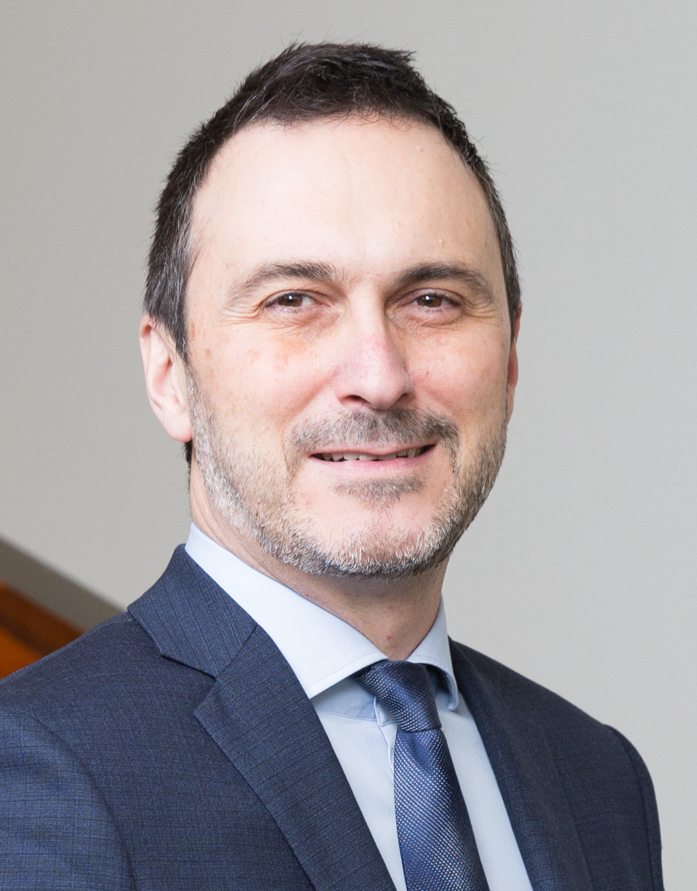
Hartman Elected President of SBE

I’m blogging “live” from the site of the final day of the 2006 Annual Meeting of the Society for Business Ethics, here in Atlanta. I heard too many interesting papers to single out one or even a few to talk about here. So instead I’d like to take this opportunity to send out hearty congratulations to Edwin Hartman upon his selection as the new President of the SBE. Ed is founding director of the Prudential Business Ethics Center at the Business School at Rutgers University, and has written influential works on a range of topics in business ethics, with a special focus on virtue ethics and the connection between character and organizational culture. Ed has had a wide-ranging career, including earning both a Ph.D. in Philosophy and an MBA, and working as a professor, a consultant, a corporate executive, and a professor again.
Ed is taking on the role of President after serving as a member of the SBE’s Board of Directors for several years, as program chair of the SBE’s 2005 Annual Meeting, and as a member of the Editorial Board of Business Ethics Quarterly.
Aristotle wrote, “Dignity does not consist in possessing honors, but in deserving them.” He also wrote that “Wit is educated insolence.” Ed is a man of considerable dignity and wit. He’s a good man, sure to wield his gavel justly.
Edwin Hartman’s Books:
Organizational Ethics and the Good Life (Oxford University Press, 1996)
Conceptual Foundations of Organization Theory (Ballinger, 1988)
Substance, Body, and Soul: Aristotelian Investigations (Princeton University Press) (Princeton University Press, 1978)


 The Business Ethics Blog