Archive for the ‘Uncategorized’ Category
Do All ‘For-Profit’ Companies Seek Profits?
There’s a common assumption that all companies seek profits. But is that assumption true? Never mind things like not-for-profit organizations. Let’s also set aside so-called “social enterprises,” companies that have an explicit social mission. I have in mind here genuine commercial entities. Do they always seek profits?
I can think of a few kinds exceptions, types of firms that don’t, as a rule, seek profits — or that at least don’t take profit-making to be their primary mission. I think you could also argue that Google is an example. It surely is profitable, but its behaviour suggests that that’s not its main goal. A fan would say that what Google wants to do is to organize the world’s information. A cynic would say Google’s goal is to dominate or control all that information. Profit is the tool that lets Google expand its sphere of control. Note that Google has apparently never paid a dividend — a share in profits — to its shareholders, though it certainly has had the profits to do so.
But the main example I’d like to put on the table today is this: most firms in the biotechnology industry.
Most biotechnology firms never make a profit. Indeed, for many of them it’s not even a reasonable goal, given that many of them never even put a product on the market. So most of them lose money on a yearly basis. Biotech companies are basically R&D companies. They often begin life as university spinoff companies, work for a few years turning a scientific idea into a plausible bit of technology, and end up being bought out by a large pharmaceutical company. And sometimes that’s the explicit goal. So in a very plain sense, they’re not “profit-seeking.” Their goal is to build their portfolio of intellectual property to the point where they become attractive to Big Pharma. So, question: does it make sense to call these firms “profit-seeking”? It’s not as if they’re charities. They’re aiming at commercial success, and would surely love to see a profit if that were possible. But for them commercial success doesn’t mean generating profits, in the usual sense. Whether that’s an important difference or not depends on whether profit-seeking per se has an ethically worse (or better!) influence on management behaviour than the zealous pursuit of other objectives.
Unwritten Rules
 People generally underestimate the important role played by unwritten rules in just about every facet of our lives. From family, to church to work to play, all sorts of unwritten rules (philosophers may refer to them as “norms” or “conventions”) give structure to, and generally civilize, our world. Some unspoken rules are pernicious, of course. In some places still today, there is an unspoken understanding that one part of the beach is for whites and the other part of the beach is for blacks. And in some institutions, there’s an unspoken rule that women don’t get equal consideration for promotion. But in general, unspoken rules make our world safer and more enjoyable, and they reduce the need for explicit rules of the kinds promulgated and enforced by government and other institutions.
In that regard, here’s a very interesting short piece rom The Guardian’s Bike blog: Winning the Tour de France means learning its unwritten rules.
Written ethical codes don’t count for much in cycling. There have been a couple of attempts to make professional cyclists sign charters stating they won’t take drugs, but they have been quietly abandoned, because they didn’t stem the tide of positive tests, and they were viewed solely as window-dressing. The unwritten rules are another matter. They are everywhere, although the Contador-Schleck episode shows that as in Pirates of the Caribbean, the “code” is sometimes merely viewed as a guideline….
So, food for thought: what unwritten rules civilize the world of commerce? What unspoken standards civilize the following:
- Interactions with your co-workers, or with your boss?
- Interactions with the businesses you interact with daily, both big and small?
- Interactions between businesses?
What Does BP Owe its Shareholders? Nothing.
 People have generally been dismayed at the behaviour of BP execs in the wake of the disastrous oil spill. CEO Tony Hayward has been roundly criticized, both for his overall handling of the situation, and for asking dumb questions like “What the hell did we do to deserve this?” The unmistakable impression is that BP’s ‘heart’ really isn’t in it when it comes to fixing this mess, and that they’re more interested in preserving what’s left of their reputation and in protecting profits.
How, ethically, ought BP’s execs to be behaving? Where do their obligations lie? Should they be focused 100% on cleanup? Should they be trying to preserve and build shareholder value? Should they be balancing those 2 objectives?
Generally, the task of corporate managers is to build wealth for shareholders. Don’t forget, executives are hired to run a business they don’t own, so it’s not up to them to decide how to run it. The standard view is that their job is to serve the shareholders. As long as they do so in constructive ways — through innovation, efficiency, etc. — and as long as innocent bystandards aren’t hurt, such profit-seeking is in fact socially beneficial. So one way to think about business ethics is that managers are free to compete aggressively, focused primarily on shareholder value, as long as they’re not misleading customers, abusing monopolistic power, or foisting costs on bystanders (i.e., imposing what economists call “negative externalities”). Those behaviours represent the boundaries of the ‘game,’ as it were. Within those boundaries: play ball!
This view implies that as long as a company keeps its nose clean, they don’t need to feel bad about pursuing profits, even when doing so means, for example, putting a competitor out of business, resulting in a loss of jobs, etc.
OK, so now consider BP. A year ago, BP’s managers might have been able to say something like this: Our job is to build shareholder value. We do that by producing a product society needs and is willing to pay for. As long as we don’t pollute too much (after all, all industry creates at least some pollution) it’s ethically OK for us to focus on our the interests of our shareholders.
Now, fast-forward to right now, to June of 2010. BP’s managers can’t exactly help themselves to the above argument, can they? The condition that normally justifies the zealous pursuit of profits doesn’t obtain, here, because BP’s managers haven’t been anywhere near sufficiently careful about avoiding imposing costs on others. Indeed, they’ve imposed massive costs (massive negative externalities) on the people of the Gulf Coast states, and (less directly) on the rest of us too.
So, when BP’s managers look around them, at the wide range of individuals and groups with a stake in their current decision-making, how much weight are they justified in giving to the interests of their shareholders, i.e., to the people who benefited from their profit-seeking behaviour in the first place?
I’d say “roughly zero.”
(The philosophical version of the argument for the basis, and limits, of profit-seeking behaviour can be found in Joseph Heath’s “An Adversarial Ethic for Business: or, When Sun-Tzu met the Stakeholder,” Journal of Business Ethics, 69, 2006. A downloadable version is on Joe’s page here.)
Business Ethics & Alternative Medicine
Filed under: health, natural, pharma, product safety, regulations, retail, Uncategorized |
 Comments (2)
  This is a “meta” blog posting, bringing together the various blog entries of mine over the last couple of years on the single topic of business ethics and alternative medicine.
Alternative medicine (includes things like homeopathy, herbal supplements, Traditional Chinese Medicine, acupuncture, therapeutic touch, and so on) raises some interesting ethical issues. On one hand, most of it doesn’t work (or to be more accurate, most of it is unproven, and much of it is disproven), and we tend to think people should only sell products that work as advertised. But on the other hand, alternative medicine has many fans, and we generally think consumers ought to be able to choose for themselves what products are good for them.
Two other factors make alternative medicine interesting, from a business-ethics point of view.
One factor is that both the safety and efficacy of alternative therapies varies. Some therapies (e.g., homeopathy) are entirely implausible, whereas others such as some herbal therapies probably are effective. Not surprisingly, the pattern is reversed for safety: homeopathy is entirely safe (unless the consumer does something foolish like forgoing real medicine in favour of homeopathic remedies for the treatment of a serious illness), while on the other hand some herbal remedies pose significant dangers.
The second important factor is that alternative medicine is generally under-regulated. In Canada, for example, herbal supplements are categorized as “natural health products” and subject to only minimal oversight. The result is that neither consumers nor companies can assume that the law is providing significant oversight. In the absence of strong consumer-protection legislation, there’s a particularly strong obligation for companies to act ethically.
Here are my blog postings on this topic, in reverse-chronological order:
- Pharmacists and Candour About Homeopathy (May 2, 2010)
- Consumer Protection & Homeopathy (April 12, 2010)
- Which Alternative Therapies is it Ethical To Sell? (March 8, 2010)
- Charities, Stakeholders, and Guilt By Association (August 28, 2009)
- Ethical to Teach a Bogus Therapy? (August 25, 2009)
- Second Plea to Alternative Health Practitioners: Help With Health Reform! (June 17, 2009)
- British Chiropractors Retreating from Publicity (June 10, 2009)
- I Need A Homeopath or Naturopath (May 17, 2009)
- Marketing Useless (Magnetic) Products (October 21, 2008)
By the way, to the best of my knowledge, there is not a single scholarly paper that looks at the selling of alternative medicines from a business-ethics point of view. If you know of one, please let me know!
Facebook and Dangerous Ideas
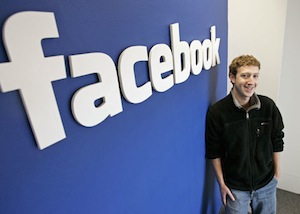 Of all the ideas that a CEO can have, is the most dangerous one the idea that his main objective should be to generate profits for shareholders?
How about a belief in the idea that your privacy — the privacy of millions of customers, whose information he holds in the palm of his hand — just doesn’t matter? That’s roughly what Facebook CEO Mark Zuckerberg seems to believe.
Venture Beat’s Kim-Mai Cutler looked around and found a bunch of evidence about just what Zuckerberg believes, including this gem:
“You have one identity,” he emphasized three times in a single interview with David Kirkpatrick in his book, “The Facebook Effect.” “The days of you having a different image for your work friends or co-workers and for the other people you know are probably coming to an end pretty quickly.” He adds: “Having two identities for yourself is an example of a lack of integrity.”
What Zuckerberg is really talking about when he talks about people having “two identities” is privacy. He means revealing more or different information to some people than you do to others. And far from betraying a deep character flaw (“lack of integrity”), giving differential access to information about ourselves is widely regarded as an important part of how we develop and maintain intimate relationships. Your friends (including Facebook “friends”) are more or less just people who have access to information about you that most people don’t have. What it means to be intimate with someone (sexually or otherwise) is to give them access that you don’t give to everyone. It’s what makes them special. For someone like Zuckerberg not to understand this is truly scary, given how much information he controls.
And as usual, my point here is more about the general question than about the particular instance. The point of this blog entry isn’t to add one more voice to the chorus of criticisms levelled against Facebook recently. I’m just using Facebook as an example, to illustrate the point. Many people believe that the belief in the importance of profits is the big, dangerous idea we need to worry about. But it’s not. There is nothing wrong with zealously pursuing profits, so long as you don’t do so through anti-social means.
So here’s a CEO with a truly scary belief, but it’s not the belief in the importance of profits.
No, the real danger doesn’t lie in a commitment to making profits; the danger lies in what you’re willing to do to make those profits.
Corporate Responsibility and the “Rule of Rescue” (Video)
A couple of weeks ago I blogged about the obligation to rescue trapped miners.
On a recent visit to the Kenan Institute for Ethics at Duke University, I was interviewed on the topic for the Institute’s “Conversations in Ethics” series. Here’s the 4-minute YouTube video that resulted.
(I should point out that the view I articulate in the video owes a significant debt to comments made by Jim Gaa on my original posting on this topic. Thanks, Jim!)
Judge Says Corporate Person Should Be Held Responsible
Here’s a story that will warm the hearts of all who think more should be done to hold corporations responsible for their bad behaviour:
“Judge Rejects Plea Deal on Guidant Heart Device”
A federal judge in Minnesota on Tuesday rejected a plea agreement between the federal government and the Guidant Corporation, saying that the deal did not hold the company sufficiently accountable for an episode in which it sold potentially flawed heart defibrillators.
…
Judge Frank said that prosecutors should have sought probation for Guidant and its parent, Boston Scientific….
Hey, but wait! This judge is treating Guidant — a corporation — like it’s a person or something. But that’s clearly crazy, right? I mean, “probation”? How can you put something like a corporation on probation?
Remember all the hullabaloo over the Citizens United case back in January? (One of my blog entries on the topic is here.) In that decision, the US Supreme Court effectively expanded the free speech rights of corporations and unions. Much of the criticism of that decision was leveled at the Court’s implicit assumption that corporations are in some sense “persons.” Critics claimed that rights can only be held by persons (which is perhaps true), and being a person meant being a human (which is not necessarily true) and if we admit that corporations are persons, then there’s nothing to stop them from having the right to vote, adopt children, etc. (which is utterly false).
The Guidant case cited above provides a nice illustration of how important it is for corporations to be treated as legal persons — as entities with some range of rights and responsibilities. Now, as I emphasized in the aftermath of the Citizens United case, to think of corporations as persons is not in any way to argue for a specific set of rights or responsibilities. There’s plenty of room for debate about just which rights and which responsibilities make sense. Not all persons have exactly the same range of rights and responsibilities. (Compare adult persons with infant persons, for example.) But there’s no denying that if you want to hold corporations responsible for their behaviour — behaviour that might not be attributable to any particular executive, or at least to any executive still with the company — you need for courts to be able to see the organization as an entity, a person, in its own right.
Business Ethics & Compliance 2
I’m currently in New York, at the Conference Board’s Business Ethics and Compliance Conference.
This is the second of 3 blog entries I’ll be doing from the conference.
I went to two very different sessions this afternoon. The first was on “Enforcing Ethics and Compliance in Your Supply Chain.” Speakers from Texas Instruments and El Paso Corporation (a natural gas pipeline company) talked about the challenges faced by their companies in making sure the companies they buy things from have their own ethics-and-compliance affairs in order. Both T.I. and E.P.C. are publicly-traded companies, subject to a range of “ethics” regulations, and are required by law to have in-house ethics programs. But many of the smaller firms they deal with are privately held, and hence aren’t legally required to have such programs. But in effect, in seeking to do business with big firms like T.I. and E.P.C., these smaller firms are in effect required to meet standards set by the SEC. Interesting questions from the audience during this session included:
- Do big companies go beyond monitoring their suppliers, to monitoring their suppliers’ suppliers?
- If a small company supplies goods and services to more than one large, publicly-traded company, are there ways for those big companies to avoid duplicating efforts (in terms of the time and effort expended to verify that the small company’s affairs are in order)?
The second session I attended was called “In Search of the Good Corporate Citizen,” a session about the documentary that bears that name (see the website here.) The show was originally aired on Connecticut Public Broadcasting, and was sponsored by Altria. The producers (Denny and Win Swenson) were at the session this afternoon, along with Frank Geovannello, Manager, Compliance and Integrity, for Altria. They showed a few segments of the video — real-life stories of corporate malfeasance, mostly, along with some panel-discussion segments. (It looks like a great teaching tool, both for university teaching and for corporate training.) The discussion today, sparked by the video, focused on issues such as the significance of excuse-giving and herd mentality in facilitating wrong-doing. Keep an eye on this blog for a review of the entire video in the coming weeks.
Business Ethics & Compliance
I’m currently at this U.S. Conference Board conference in New York: Business Ethics and Compliance Conference: Priorities in Today’s Regulatory and Enforcement Environment.
I’m here as a guest of the Conference Board. I was invited so that I could blog about the event. This will be the first of 3 blog entries (1 per half-day).
Reflections on what I saw this morning:
I’m a bit of a fish out of water at this event. I’m the only academic here, as far as I can tell; the attendees are overwhelmingly corporate, and overwhelmingly lawyers. This latter fact, of course, mirrors the complaint that many people (including many philosophers who do business ethics) have about the particular way in which the corporate world has tried to put ethics into practice, namely by creating Departments of Ethics & Compliance, and by creating positions like “Director of Ethics & Compliance” or “VP, Ethics & Compliance.” Now, compliance is about following laws & regulations. The scope of ethics is broader than that. So the worry is that when you pair “ethics” with “compliance” and put lawyers in charge, you’re going to end up focusing on the “compliance” part and forgetting about “ethics”, broadly understood.
But what I’ve seen here so far, today, is heartening. The lawyers I’ve heard speaking thus far today (including speakers and audience members) are very clearly interested in much more than narrow legal compliance. It’s clear that legal compliance is fundamental, here, but it’s also clear — clear to people at this conference — that other stuff matters too. It matters both for its own sake, and because of the role that ethics plays assessing legal culpability. Both the US federal sentencing guidelines, for example, and the US Air Force’s standards for contractors, essentially imply that corporate character matters.
So, this is a field dominated by lawyers. But it’s good to see that they care about more that just the law, narrowly construed. Of course, there’s a self-selection effect at play here: lawyers who go into this field are likely to be precisely the lawyers who don’t think narrowly about the law. There’s also the possibility, I suppose, that what I’m hearing is rhetoric rather than true belief. But given the audience, here, I’m effectively seeing how Ethics-and-Compliance-oriented corporate lawyers talk to each other. And if they talk as if they truly care about ethics, I doubt it’s because there’s a blogger in the room.
(FYI, so far I’ve heard Win Swenson (godfather of the US corporate sentencing guidelines) and Donna Boehme speak about “Priorities in Today’s Regulatory and Enforcement Environment” and Steven Shaw (Deputy Counsel, US Air Force) and Timothy Schultz talk about ethics in government contracting. Swenson and Shaw were particularly great.)
(p.s. I’m also Tweeting about the conference. If you’re on Twitter, you can follow at #tcbethics )
Consumer Protection & Homeopathy
Here’s a guest posting I’ve just done, for the Science-Based Pharmacy Blog: Homeopathy and Consumer Protection.
Here’s a snippet:
I’m going to pose two questions for homeopaths to answer, questions that I would likewise pose to any other kind of reputable business, especially any other reputable business in the field of health.
1. How do we detect phoney homeopathic preparations? In order to protect consumers, we need to be able to detect fake remedies — fake versions (sold by counterfeiters) that are really just inert look-alike copies of genuine remedies. In an age of international trade and Internet-based pharmacies, phoney pills are a big problem. …
2. What advice would you give a potential patient/customer who is trying to choose among various alternative therapies? How should a potential customer/patient choose between homeopathy, Therapeutic Touch, acupuncture, Angel Therapy, and so on? In other words, how can consumers know that they’re about to buy something good, rather than something bogus? “Trust me” won’t do…
Basically, the blog entry is an attempt to have a constructive conversation about consumer protection in a realm typified by name-calling and mutual mockery. The online “debate” over homeopathy typically involves science-minded folks smacking their foreheads at the scientifically-implausible claims made by homeopaths, and homeopaths smacking their foreheads at how skeptics “just don’t want to see” the truth. But the topic is too important to leave at that level. The two sides are never going to agree about how (in)effective homeopathy is. But they must agree on the importance of protecting consumers. The question, then, is how best to do that.


 The Business Ethics Blog