Archive for the ‘Uncategorized’ Category
India: Using Ethics to Build an Industry
 Comments (2)
 Ethics professors like me are fond of what we call “state of nature” thought-experiments. If you want to understand the value of a particular ethical standard (or the value of ethics in general) try to imagine what life would be like “in the state of nature” — that is, try to imagine what life would be like in a world without it. For example, if you want to understand the importance of telling the truth, imagine a world in which no one ever felt required to tell the truth — a world in which no one ever felt any compulsion to be truthful.
Sometimes, of course, our imaginations fail. We’re so used to taking certain ethical standards for granted that it makes it hard to imagine life without them. That’s especially true with regard to business ethics: the standards are often complicated and the role they play in commerce often isn’t obvious. In some cases, though, we don’t need to rely on our imaginations, because we can look to less-developed economies where business ethics in the formal sense is still being developed.
See, for example, this story from the Times of India: Drug cos associations agree to strict enforcement of ethics code
On Tuesday, representatives of drug company associations agreed to the need for the creation of a combined code of ethics and its effective enforcement.
At a meeting with pharmaceutical secretary Ashok Kumar, under the chemicals and fertiliser ministry, the representatives said that most of them followed a code of ethics. They, however, “admitted” that some pharma companies did not have such a code.
They assured Kumar that they will get back to him within a month with a uniform code of ethics that will be followed by all drug companies….
The basic idea, here, is that reliable ethical standards for companies aren’t just good for consumers — they’re good for the companies, too. Pharmaceutical companies in India have realized this, and so they’re doing their best to convince the Indian government that they’re committed to ethics. Why? Three main reasons. First, while you can obviously make a lot of money in the short run by doing business unethically, you can usually make even more money, in the long run, by doing business ethically, and building a reputation as a trustworthy industry.
Secondly (though this isn’t mentioned in the story), Indian pharmaceutical companies need to establish a reputation as ethical because they want to be able to form partnerships with wealthy North American and European companies, and to gain access to the lucrative North American market. India is not a wealthy country. Most of its citizens can’t spend a lot on pharmaceutical products. But an Indian company that can show itself to be trustworthy is more likely to get the chance to sell its products in to relatively affluent North Americans. There is big, big money to be made there.
The third reason is suggested here:
[The drug companies] requested the government to refrain from any legal intervention in the matter and leave the matter to be sorted out by the pharma corporate bodies.
Government in general has an obligation to protect consumers. But when your company or industry is perceived as ethical, you can make a much better argument in favour of government taking a hands-off approach and allowing industry a significant degree of self-regulation. Of course, industries don’t always do a good job of making and enforcing their own rules; only time will tell how well the Indian pharmaceutical industry does in this regard. But in this story we see a nice example of the very genesis of a set of ethical rules within an industry, and an illustration of the idea that business ethics isn’t just about putting external constraints on businesses but also very often about the kinds of rules to which businesses have good reason to commit themselves.
Please Treat Our Staff With Respect
I spotted this sign at a large retail store on the outskirts of Ottawa a couple of days ago:

More specifically, the sign was taped to the checkout counter.
Now, a couple of things strike me.
1) The sign is at least borderline rude to customers. Obviously, it’s aimed at the obnoxious few who have the poor judgment to take out their Christmas shopping frustrations on sales clerks. But the sign is addressed to everyone. I’ve never been rude to a checkout clerk in my life. Why are they reminding me to be nice?
2) On the other hand, the sign also represents a laudable effort by management to make good on their obligations to their employees. Employees deserve to be treated with respect, and that includes by customers. It may be true that “the customer is always right,” but employees shouldn’t have to be subject to rudeness and abuse. Managers who stick up for their employees should be congratulated.
3) Finally, I can’t help thinking that a sign of this sort is a relatively bad way to pursue this particular goal. I mean, at least it’s printed professionally and not hand-written. But still. Is this the best social engineering we can do? Isn’t there a more effective method of reminding people of their manners? I think in general when you see signs taped to things (think how many times you’ve seen a hand-scribbled sign that says “Please use other door”) it’s an indicator of a failure of design, either physical or organizational.
Hooters, Domestic Violence, and Looking “Glamorous” at Work
 Some companies start out on shaky ground, and their basic business model just makes it harder for them defend themselves when trouble comes along.
Case in point: this all-around depressing story from the Des Moines Register, Benefits awarded to beaten Hooters waitress
A waitress was barred from working at the Hooters restaurant in Davenport after a violent physical attack left her bruised and unable to meet company standards for maintaining a “glamorous appearance.”
The waitress alleges she was fired after taking time off to recover from the assault. Hooters officials say the waitress abandoned her job, but also say that the woman’s bruised body made her temporarily ineligible to work as a “Hooters Girl.”
An administrative law judge who presided over a recent public hearing dealing with 27-year-old Sara Dye’s request for unemployment benefits ruled against the company and awarded benefits to Dye. Judge Teresa Hillary found that Dye’s “inability to work due to bruises” did not amount to workplace misconduct.
I’ll limit myself to two observations, here:
1) Hooters must be far from the only employer that insists that employees maintain a “glamorous appearance.” I suspect a serious beating would be just as likely to get you deemed unfit for work on Broadway, or as an actor or actress in just about any setting. And probably in lots of service industry jobs. So it’s not merely because of Hooters’ objectification-of-women business model that they ended up in this situation. Much more palatable businesses could face the same problem.
2) I suspect most people would be more sympathetic to Hooters, in this case, if there were evidence that the company — aside from its assertion that the bruised employee was unfit to work — had gone out of its way to be (or even been minimally) supportive, or had helped its employee get medical help, police help, and/or counselling. Firing the woman looks much worse when it seems to have been the company’s only reaction.
Broken Hearts, Donated Kidneys
 I blogged back in November about the legal status of kidney sales. In most places, it’s illegal to sell kidneys (and other organs). But it’s permissible — indeed, encouraged — to give them away, i.e., to donate them.
But the line between gift giving and commerce is not entirely clear. There have always been concerns that some people might “donate” organs and then expect (or simply receive) lavish “gifts” (perhaps even in the form of cash) from grateful recipients. Here’s a different kind of case that appears to put pressure on that distinction. What, exactly, should the returns policy be for a gift?
The newswires & the blogosphere are a-buzzin’ with this story:
Husband who donated kidney to wife wants it back now that they’re divorcing
When his wife needed a kidney transplant, Richard Batista — a doctor — gave her one of his, attorney Dominic Barbara said.
Now that Dawnell Batista has filed for a divorce, Richard Batista wants his kidney back as part of his settlement demand.
Or, Barbara said Wednesday, his client wants the value of that kidney: An estimated $1.5 million.
The case is being handled in Supreme Court in Mineola, N.Y.
As the ethicists (Caplan and Veatch) quoted in the story rightly point out, the request is ridiculous. A gift is a gift, and there’s neither legal nor moral grounds for Dr. Batista to ask for the kidney back. Now, Batista has said that, in lieu of the kidney, he’d be happy to have the cash value, instead, which he’s pegged at $1.5 million. But that makes no sense, either: a kidney has no cash value, at least not in North America (and the value in places where kidneys can legally be bought is much lower than that). And a calculation of the value of this particular kidney would have to take into account that it’s already been transplanted once, and I’m guessing re-transplanting it back into its original owner would not have a terrific likelihood of long-term success. So its value would be lower. Anyway, the whole story is pretty ridiculous. I guess some people just love publicity.
But we can extrapolate from the silly story to raise some interesting questions about what an actual, regulated market in kidneys would or should look like. (cf. James Stacey Taylor’s 2005 book, Stakes And Kidneys: Why Markets In Human Body Parts Are Morally Imperative) What would the returns policy be, in such a market? Would different vendors have different policies, and compete on that basis? What happens when the cheque bounces? Would the buyer be able to get a refund (a partial refund?) if she found out later that the kidney had not been well cared-for prior to transplantation, and was hence less healthy than originally thought? I suppose in some ways, a market in organs would be like a market in implantable medical devices (like pacemakers and steel pins to hold shattered bones together). Then again, a kidney, or a heart, isn’t a manufactured, mechanical device in the usual sense. Human body parts are hard to disentangle from human emotions, and that might well affect the terms on which we allow them to be traded.
For students and observers of business ethics, it’s a good exercise to imagine a market that does not yet exist, and imagine what ground-rules would, or should, govern that market.
Fur is “Green”?
 When going “green” becomes the latest in corporate fashion, who better to jump on the bandwagon than, well, the fashion industry?
Check out this website, from the Fur Council of Canada, which claims that if you really love the environment, you’ll show it by wearing fur: Furisgreen.com
A new vision of fur, for an Eco-Conscious World!
Fur is warmth, comfort and beauty. For many, fur is the ultimate luxury. But using fur also makes sense if we want to protect nature while supporting people and cultures.
The reference to “people and cultures” is a reference to the fact that for some people in rural regions (and especially native populations in the far north), fur-trapping is a major source of income and a way of life. But how is fur “green?”
The website admits that “few products can be 100% “green” (if only because fossil fuels are used to bring them to the market),” but “environmentally friendly apparel and accessories should be made from natural materials” that have certain characteristics, characteristics that animal furs have. Namely, according to the website…
- Fur is Renewable
- Fur is Durable, long-lasting
- Fur is Reusable, recyclable
- Fur is Biodegradable
- Fur is Energy & Resource efficient
(The site has pages of information about each of those claims. Plenty of fodder for fact-checking by skeptics.)
The reason this “fur is green” campaign will be jarring to some is that there tends to be considerable overlap between a) being an avowed environmentalist and b) being against the fur trade. It may strike some as a form of “greenwashing” — but that would be unfair, if the environmental claims made on behalf of fur are sound.
But evaluating the fur business, from an ethical point of view, is more complicated than that. There are really 3 key issues: environmental impact, support for indigenous cultures, and animal cruelty. I suspect (but it’s just a guess) that the Fur Council can make a pretty good case in two out of three of those areas. Can we find agreement on which two, and on which two matter the most?
Not All “Free” Markets are Good Markets
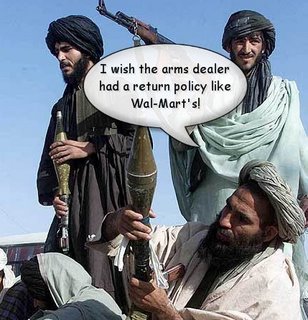 We hear a lot of talk about “free” markets. Some people tout the virtues of free markets; others lament our reliance on free markets in areas where government intervention might work better. But of course very few (if any) markets are truly “free”, in the sense of being utterly unregulated by any outside authority. Most economies are what economists refer to as “mixed” economies, characterized by a mixture of private and public ownership of the means of producing various kinds of goods. In Canada and the U.S., for example, most consumer goods are produced by private companies, but mail delivery, national defense, and some kinds of insurance are provided by government.
Here’s an interesting article (from the NY Times) about just why it is that you don’t want markets to be too free.
For Afghans, a Price for Everything, and Anything for a Price
KABUL — When it comes to governing this violent, fractious land, everything, it seems, has its price.
Want to be a provincial police chief? It will cost you $100,000.
Want to drive a convoy of trucks loaded with fuel across the country? Be prepared to pay $6,000 per truck, so the police will not tip off the Taliban.
Need to settle a lawsuit over the ownership of your house? About $25,000, depending on the judge.
“It is very shameful, but probably I will pay the bribe,” Mohammed Naim, a young English teacher, said as he stood in front of the Secondary Courthouse in Kabul. His brother had been arrested a week before, and the police were demanding $4,000 for his release. “Everything is possible in this country now. Everything.”
The result?
The corruption, publicly acknowledged by President Karzai, is contributing to the collapse of public confidence in his government and to the dramatic resurgence of the Taliban…
Not only that, but it means that Afghanistan is the kind of place where it’s likely terribly difficult to set up and maintain a profitable business — the kind that’s beneficial, in the long run, to a wide range of stakeholders. And it’s positively not the kind of place that’s likely to attract crucial foreign investment. Not only does bad money drive out good; it seems bad markets are likely to drive out good ones, too.
Who’s “Influential” in Business Ethics?
 I noted yesterday that I’d been recognized as one of the “100 Most Influential People in Business Ethics 2008,” by Ethisphere Magazine. It’s an honour, of course, and gratifying to know, after 3 years of blogging, that there are people out there who appreciate what I do and believe it has some impact.
But one of the things I do on this blog is ask critical questions about ethics awards and commendations. (See here, here, and here for example.) So, it behooves me to ask a few critical questions and make a few critical comments about this ranking, too.
Business Ethics Blog’s Influence Recognized
 For my work on this blog, I’ve just been named one of the “100 Most Influential People in Business Ethics 2008” by Ethisphere Magazine. I’m #81.
Misleading Muffins
When it comes to product information, it pays to read the fine print. And to do the math.
For example…
A friend of mine took this picture at a Trader Joe’s store in North Carolina:

Notice, first:
- (a) the package claims that there are only 120 calories per serving,
That’s pretty good — about the same number of calories as, say, a multigrain bagel at Starbucks.
But notice also:
- (b) the package says that there are 8 servings, but …
- (c) there are just 4 muffins in the package.
4 muffins…8 servings? Huh? That’s half a muffin per serving? How many people consider half a muffin to be a serving? Isn’t the whole point of muffins that they are a kind of cake, but baked at single-serving size? Try going to a restaurant or café sometime and ordering “half a muffin.” It won’t work.
The natural assumption, of course, is to look at the package and think “Wow, just 120 calories per muffin!” So, this packaging is not false, but definitely misleading.
As my friend pointed out to me, it seems the packagers of this product lack moral fiber themselves.
Cookies: Yummy, But Ethically Treacherous
 It’s hard being in the ethics business. For one thing, people tend to assume you’re a 365-day-a-year Scrooge, showing up to say “Bah Humbug!” every time anyone tries to have a little fun. Then again, some people with “ethics” in their title do a good job of earning that rep.
Take, for example, this story from The Times-Picayune: St. Tammany Parish library staff must turn away holiday treats
After asking the state Board of Ethics last month whether library staff can accept inexpensive and homemade Christmas gifts from grateful patrons, St. Tammany Parish library officials last week received the board’s response: Bah, humbug.
Even small gifts, such as “cakes, pies, houseplants, etc., from patrons of the library for their performance of the library employees’ duties” are off-limits, according to an advisory opinion issued by the ethics board.
Why such a strict policy, applied to a library, of all places? Apparently the Louisiana Board of Ethics was simply trying to apply the rule consistently, the same rule that applies to all state employees.
[According to] the Board of Ethics attorney… the point of the law is to put all state employees, even those with fewer opportunities for impropriety, “on the same playing field.”
It’s easy enough to understand the desire to have an across-the-board policy that applies equally to all state employees. Librarians, perhaps, don’t wield a lot of discretionary authority. Cops clearly do. But in between there are all kinds of bureaucrats who have some discretionary authority and whose exercise of that discretion ought not be influenced by irrelevant factors like gifts. Having a single rule that applies to all is considerably easier than trying to fine-tune a sliding-scale rule for different kinds of employees.
But maybe it’s harder to understand the need to outlaw — for anyone — seemingly trivial gifts like cookies. According to the story above, the Board says that “public servants employed by a governmental agency are prohibited from receiving anything of economic value from patrons.” On this, just a couple quick points.
1. It’s not that unusual for organizations to forbid gifts altogether. Of course, the fact that such policies are common doesn’t make them right, but it’s useful to know that the State of Louisiana is not unique in its approach: lots of other organizations have taken the “just say no” approach, too, and it’s reasonable to think that they may have good reasons for doing so.
2. Some organizations have policies according to which token gifts of very small value (pens, calendars, etc.) are OK, whereas more expensive gifts (a case of wine, tickets to a championship football game, etc) are not OK. A plate of cookies or a house plant would likely count as a token gift, under such policies. However, it’s not clear that that’s a really useful distinction. There is evidence suggesting that the problem doesn’t lie entirely in the value of the gift: even gifts of trivial value can establish social bonds with the ability to influence decision-making.
(For more on the empirical evidence in this area, see: Conflicts of Interest: Challenges and Solutions in Business, Law, Medicine, and Public Policy, edited by Don A. Moore, Daylian M. Cain, George Loewenstein , and Max H. Bazerman.)



 The Business Ethics Blog