Archive for the ‘risk’ Category
Ethics & Foreclosures
Filed under: banking, consumers, finance, government, politics, risk |
 Comments (7)
 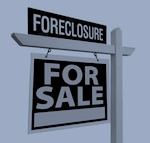 The number one business story of the week is surely the foreclosure story. A number of U.S. banks, including most notably Bank of America, have suspended mortgage foreclosures for the time being due to worries over flawed paperwork.
Here’s just one of many news items on the topic, by David Streitfeld and Nelson D. Schwartz writing for the NYT: Largest U.S. Bank Halts Foreclosures in All States
…Bank of America instituted a partial freeze last week in those 23 states, and three other major mortgage lenders have done the same. The bank’s decision on Friday increased pressure on other lenders to extend their moratoriums nationwide as well.
An immediate effect of the action will be a temporary stay of execution for hundreds of thousands of borrowers in default. The bank said it would be brief, a mere pause while it made sure its methods were in order….
As the NYT story points out, there is considerable pressure on lenders to put the brakes on. Members of Congress and various attorneys general are suggesting that it would be wise to do so.
A few quick points about ethics:
1) In case it’s not obvious, the freeze on foreclosures is an ethical issue, in addition to being a legal one. It involves shifting benefits, burdens, and risks among groups, including homeowners, banks’ shareholders, and taxpayers. (In this regard, it’s worth remembering that the banks are middlemen, essentially mediating a transaction between their shareholders, who have money to lend, and homeowners, who need to borrow. If there has indeed been any fraud or even lack of diligence on the part of the banks, it is an offence not just against homeowners, but against shareholders.)
2) Mortgages are not just like any other product. For starters, a home is by far the biggest purchase most of us will make in our lifetimes. Scale alone makes this an important issue. Further, home ownership is for most people laden with emotion. When foreclosures happen, people aren’t just losing a product; in most cases they lose a home. This is both morally significant, and accounts for at least some of the political attention being paid to the issue.
3) It’s not at all clear that a freeze on foreclosures is good for home-owners (or rather would-be home owners) over all. The ability to foreclose in the event of default is part of what makes it worthwhile for lenders to take a risk in lending money to buy a home in the first place. Also, foreclosures put houses on the market, helping to keep prices down. Fewer foreclosures may mean a rise in prices. (See CNN-Money: Foreclosure freeze shakes battered home market). Since ethics is, in part, about evaluating outcomes, recognizing the effects of the freeze on the full range of stakeholders is ethically important.
Should Trapped Miners Be Paid?
Filed under: disaster, employees, government, risk, taxpayers, wages, workplace safety |
Comments (20)  Most people don’t expect to be paid when they’re not doing work. Sure, most people get paid during coffee breaks, and lucky folks get paid vacations. And some people get paid sick days. But what about when you’re not working for months on end? Does any employer have an obligation to pay you under those conditions? What about when you’re not working, but physically at work, for months on end?
That’s the issue faced by 33 miners trapped 2,300 feet below ground, in a collapsed Chilean mine.
Here’s the story, written by Nick Allen for the Daily Telegraph, but featured in the Ottawa Citizen: Trapped miners may not be paid
The 33 Chilean miners trapped underground may not be paid for months while rescuers try to reach them, leaving their families with no income.
The San Esteban company, which operates the mine, has said it has no money to pay wages and is not even taking part in the rescue.
It has suggested that it may go bankrupt and its licence has been suspended.
Evelyn Olmos, the leader of the miners’ union, called on Chile’s government to pay the workers’ wages from next month….
My initial impulse: yes, of course the miners deserve to get paid. Granted, they’re not exactly doing productive work, but that’s not their fault. Even though they’re not working, they are in fact still on the job. The problem, of course, is that the company seems financially incapable of paying them, not just unwilling. Legal means can be attempted, but if it’s really true that the company is bankrupt — well, you can’t get blood from a stone. (Note also that, for what it’s worth, the mine’s owners have asked the miners for forgiveness.)
So that leaves the government (i.e., the citizens) of Chile. Should they pay? Now, to be clear — and this is a crucial distinction — I’m not just asking whether it would be a good thing if the miners end up getting paid. I’m asking whether Chilean taxpayers have an obligation to pay them. I think the answer to that is less clear than the question of whether a financially-capable company would have an obligation to pay them. Now, this isn’t a public policy blog, it’s a business ethics blog, so I don’t often delve into what constitutes the morally-best decision for government. But it’s worth thinking about what principles might apply to this case not just from the point of view of government’s obligations to citizens in need, but from the point of view of government’s obligations to take up the slack when industry undertakes dangerous operations that can end up requiring considerable financial resources when things go wrong. Is government’s willingness to clean up the mess part of what lets mining companies put miners at unreasonable risk in the first place? Or should we think instead that the government’s willingness to help out is just part of the insurer-of-last-resort role that we want government to take on, and that allows all sorts of companies (responsible or otherwise) to be in business in the first place?
As a post-script, I should point out that the moral parallels between the Chilean mine rescue and the BP oil spill cleanup, in this regard, are striking.
—-
Also of interest, on the Research Ethics Blog:
Could Research be Done on the Trapped Miners?
Should Consumers Trust Big Pharma?
Filed under: accountability, conflict of interest, consumers, honesty, pharma, product safety, profits, risk, science |
Comments (9)  Lots of people don’t trust Big Pharma. And to a significant extent, that’s for good reasons. (I’ve blogged about some of those reasons here, here, here, here, here, here, here and here, just to cite a few examples. See also some of the entries on the other blog I co-author, the Research Ethics Blog.)
Trust in big pharma is an important issue. Pharmaceuticals are responsible for saving and improving a huge number of lives. Vaccines alone have prevented literally millions of deaths. Survival rates for many cancers are better than they used to be. And AIDS, once a death sentence, is now regarded as a chronic disease. So there’s real benefit from pharma, but also an undeniable track record of scandals and general unethical behaviour. What should we think?
The first thing worth noting is that the question in the title above is vastly oversimplified. The question isn’t “should consumers trust big pharma?”, it’s more like “To what extent, and under what circumstances, on what issues, should consumers trust big pharma?”
Setting aside the industry’s spotty track record, the main reason people tend not to think Big Pharma trustworthy is, of course, the fact that Big Pharma consists of profit-oriented organizations. And the general assumption is that money corrupts. Of course, money isn’t the only thing that corrupts judgment (so does love, reputation, ideology, etc etc), and big pharma is far from the only industry where big money is at stake. But still, there’s a real worry here (one I’ve blogged about before).
Now, what about the reasons in favour of trusting Big Pharma? What factors would tend to make Big Pharma trustworthy, to at least some extent?
Now I cannot emphasize this strongly enough: what follows is not intended to imply a general conclusion about the trustworthiness of Big Pharma. It’s just a list of important factors to keep in mind when assessing the trustworthiness of a particular claim, by a particular company, on a particular issue.
1) Ethics. Don’t just think about the organizations; think about the people who work at them. They’re mostly people like you & me. Most of them got into the business to try to help people (and, yeah, to make a living). And most of them were raised by their parents to be decent, honest folks. Most people tell the truth about most things most of the time.
2) Regulation. The pharmaceutical industry is heavily regulated, subject to lots of laws regarding the efficacy and safety of their products, as well as regarding advertising. Criminal and civil sanctions are possible when pharma companies misbehave. Now, that’s not to say that the current level of regulation is sufficient, or that enforcement is adequate. But companies (and individuals) have been subject to serious sanctions. Companies generally want to stay out of court, and so they’ve got a reason — not always a sufficient reason, but a reason — to behave in a trustworthy manner.
3) Peer Review. In few other industries is fundamental information about what makes your product work (or not work) open to public scrutiny. In order for a new drug to receive approval to be marketed, it has to show itself to be safe and effective in clinical trials, and the results and methods of those trials have to be published in peer-reviewed medical journals. Drug companies are not allowed to make claims based on secret data. “Peer reviewed” means that the articles reporting on the trials have to be vetted by a panel of qualified experts if they are ever going to see the light of day. It’s an imperfect system (all systems relying on human judgment are) but bad science tends to get weeded out pretty quickly. Then, once a study is published, it’s there for assessment, and potentially criticism and rebuttal, by hundreds or thousands of other experts.
4) Scientific Overlap. You sometimes hear it implied that physician-researchers (the ones who do most clinical research, as well as doing all that peer reviewing mentioned above) have all been corrupted by corporate money. And it’s true that there really is cause for worry here. Too many docs get too much money (and other perks) from pharma, and are insufficiently transparent about that. So: it’s good to worry…up to a point. Here’s the problem with the pharma-controls-everything theory. Physician-researchers publish in scientific journals that are read not just by other physicians (some of whom don’t have industry funding), but also by biologists, chemists, epidemiologists, statisticians, and so on, most of whom have no corporate funding whatsoever. Further, modern science more generally is an enormously complex process for finding mistakes and exaggerations in each other’s research. And it helps that there’s significant overlap between the sciences, so no one group of scientists is ever truly isolated and free from scrutiny. Oversimplifying, you could say that biologists are double-checking the work done by the physicians, chemists are checking up on the biologists, and physicists are checking up on the chemists. (That’s why any physician who tries to use “quantum theory” in writing about disease had better be careful: there are armies of physicists waiting to explain just how irrelevant quantum mechanics is to human physiology.)
5) Competition. People often talk about Big Pharma as if it’s a monolith, one big organization, rather than a bunch of companies with divergent interests competing savagely with each other. That competition gives them every reason to attack each other’s weaknesses, and to point them out to the public. Add to that the fact that there are hundreds of smaller firms nipping at the heels of the big players. It’s far from a cozy conspiracy. This vicious competition of course means that there’s sometimes an incentive to cut corners in unscrupulous ways; but it also means that when you cut a corner, there’s always someone out there ready to point it out.
Now, again, this list is not supposed to lead to any particular conclusion about just how trustworthy Big Pharma is. It’s just a list of social and institutional mechanisms we need to take into consideration, in addition to the obvious bad track record and obvious financial incentives. Each of those mechanisms will apply to a greater or lesser degree with regard to specific situations. For particular issues, we need to think carefully both about what’s at stake, and about whether the above factors are likely to be sufficient to reassure us.
——
Late-breaking Note:
I’ve been getting (and rejecting) comments full of unsubstantiated, and in some cases very dangerous, claims on some topics related to the above. When it comes to matters of health, if you’re not going to cite reliable sources, I cannot take responsibility for allowing your comments on here. There’s too much at stake, in terms of public health.


 The Business Ethics Blog