Archive for the ‘consumers’ Category
Pennies-Be-Gone: The Ethics of Rounding
 The always-useful Consumerist brings us this story, with a self-explanatory title: A Lone Dunkin’ Donuts Sort Of Abolishes Pennies
One donut shop is taking a stand against the bacteria-ridden zinc disks of suck that are pennies. Reader Tom sent us [a photo of a sign] from a store he recently visited. In a policy change that was probably born during an 8 AM rush, this franchise appears to be are rounding customer totals up or down to the nearest five cents, and only providing pennies to those annoying people who actually want them….
Setting aside paranoia about pennies causing germs, what should we say about this policy, from an ethical point of view?
First, the efficiency argument is worth noting. Lines are annoying. Lining up (i.e., standing behind other people) to get something you’re anxious for (like coffee) is doubly annoying. Speeding things up is good. So, improving the efficiency of the payment system is good.
Second, it’s worth pointing out that the system intends to treat everyone equally. Every customer is subject to the same system of rounding. In principle, no customer is disadvantaged relative to any other customer, and indeed (importantly) the customer is not disadvantaged relative to the coffee shop. Round up or round down — it’s all just a matter of math.
Third, in practice, this system may not actually end up treating everyone equally. As one person (with the pseudonym “Pecan”) who commented on the Consumerist piece pointed out, regulars who buy the exact same thing every day are going to be either systematically advantaged or systematically disadvantaged. If their change is “supposed” to be 27 cents, they’re only going to get 25 cents — every time. If they don’t realize that, then they’re going to lose money, time after time, in a way that will add up. Clearly, it would take a long time to add up to an amount that most of us might care about, but it’s still worth noting.
Finally, it’s worth pointing out that such a system allows the coffee shop a new way of acting unethically. Not that the rounding is itself unethical — it’s not. But if accepted by customers, the rounding offers the shop the opportunity to set its prices so that, on average, it ends up rounding in its own favour more often than it rounds in customers’ favour. Prices that end in “8”, for example (such as $1.38) will always result in exact change ending in “2”. For example, a price of $1.38 results in 62 cents expected back from two dollars. When the exact change is an amount ending in “2”, that will always be rounded down to zero, resulting in 2 cents’ extra profit on every transaction. On low-priced items like coffee and donuts, that could mean a significant increase in the store’s profit margin.
Ethics & Foreclosures
Filed under: banking, consumers, finance, government, politics, risk |
 Comments (7)
  The number one business story of the week is surely the foreclosure story. A number of U.S. banks, including most notably Bank of America, have suspended mortgage foreclosures for the time being due to worries over flawed paperwork.
Here’s just one of many news items on the topic, by David Streitfeld and Nelson D. Schwartz writing for the NYT: Largest U.S. Bank Halts Foreclosures in All States
…Bank of America instituted a partial freeze last week in those 23 states, and three other major mortgage lenders have done the same. The bank’s decision on Friday increased pressure on other lenders to extend their moratoriums nationwide as well.
An immediate effect of the action will be a temporary stay of execution for hundreds of thousands of borrowers in default. The bank said it would be brief, a mere pause while it made sure its methods were in order….
As the NYT story points out, there is considerable pressure on lenders to put the brakes on. Members of Congress and various attorneys general are suggesting that it would be wise to do so.
A few quick points about ethics:
1) In case it’s not obvious, the freeze on foreclosures is an ethical issue, in addition to being a legal one. It involves shifting benefits, burdens, and risks among groups, including homeowners, banks’ shareholders, and taxpayers. (In this regard, it’s worth remembering that the banks are middlemen, essentially mediating a transaction between their shareholders, who have money to lend, and homeowners, who need to borrow. If there has indeed been any fraud or even lack of diligence on the part of the banks, it is an offence not just against homeowners, but against shareholders.)
2) Mortgages are not just like any other product. For starters, a home is by far the biggest purchase most of us will make in our lifetimes. Scale alone makes this an important issue. Further, home ownership is for most people laden with emotion. When foreclosures happen, people aren’t just losing a product; in most cases they lose a home. This is both morally significant, and accounts for at least some of the political attention being paid to the issue.
3) It’s not at all clear that a freeze on foreclosures is good for home-owners (or rather would-be home owners) over all. The ability to foreclose in the event of default is part of what makes it worthwhile for lenders to take a risk in lending money to buy a home in the first place. Also, foreclosures put houses on the market, helping to keep prices down. Fewer foreclosures may mean a rise in prices. (See CNN-Money: Foreclosure freeze shakes battered home market). Since ethics is, in part, about evaluating outcomes, recognizing the effects of the freeze on the full range of stakeholders is ethically important.
California’s Marijuana Industry: Ethical Issues
Filed under: competition, consumers, CSR, employees, health, law, natural, pharma, politics, product safety, profits, regulations, retail, snacks, wages |
Comments (4) 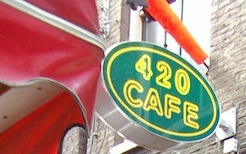 I’ve blogged about the insurance industry, the mining industry, the auto industry, even the donut industry. But the pot industry? Yes, it’s time.
From the Sacramento Bee: Growth of California’s Pot Industry is Good News for Unions
As Californians prepare to vote on a November ballot initiative that would expand legalization to recreational pot use, labor groups see the potential for perhaps tens of thousands of unionized jobs.
United Food and Commercial Workers Union, Local 5, which has 32,000 members in California working in trades including the grocery and food processing industries, began organizing marijuana “bud tenders,” greenhouse workers, packagers and laboratory technicians last spring….
So, here a budding industry, built around a controversial product that is illegal in most jurisdictions. There’s plenty of grass-root support for broader legalization (both for medicinal and recreational use). But there may be enough opposition to blunt the enthusiasm of law-makers about sudden moves. The support of politically-powerful unions is another ethically-significant factor — as is the potential capture of this new industry by unions.
This is such a rich and interesting story that there’s too much in it for me to try to hash it out by myself without resorting to quick, potted answers. So here are a handful of questions to seed the discussion. I’ll let you weed the good from the bad.
- Ryan Grim reports that “The teachers union, citing the revenue that could be raised for the state, is also backing the initiative.” Is that sufficient reason? You don’t have to be an anti-pot puritan to worry about anything that might (inadvertently) encourage use of pot by school-age kids.
- What business ethics issues are faced by producers and sellers of pot in the illegitimate parts of the drug industry? What new issues will the newly-legitimized industry face?
- What CSR-type responsibilities does the (expanding) legal marijuana industry have?
- Why are California Beer & Beverage Distributors lobbying against the proposed change? (See useful discussion over at Marginal Revolution).
- What sorts of regulations should the industry seek? What motives will be foremost in industry’s mind in his regard — protecting revenues? protecting its image? protecting consumers?
- Will the other drug industry — the pharmaceutical industry — move into this line of business? Why or why not?
- Is the unionization of this industry generally a good or bad thing? Unionization improves the lot of workers, but also tends to raise prices. Since unionization itself is controversial, let’s ask it this way: is the case for unionization stronger or weaker, with regards to the marijuana industry?
I’ll open the floor for discussion.
Consumers’ Right to Information
Filed under: advertising, consumers, food, health, labelling, regulations |
Comments (5)  Over on my Food Ethics Blog, I recently posted a piece on the oft-proclaimed “right to know what I’m eating.” That right is often asserted, but seldom explained. Do we have a right to know everything about what we’re eating? Basically I argue that rights are a very serious kind of moral mechanism, to be used only to protect our most important, central interests.
Now, that blog entry was specifically about the right to know about your food. The (claimed or actual) right to information about your food is of course just one among many (claimed or actual) rights for consumers to know things about the products they’re buying.
Now, sometimes rights arise from government action: under food labelling laws in Canada and the U.S., for example, consumers have a right to know the basic nutritional characteristics — including calories — of the packaged foods they buy. So, does this right follow the pattern I suggested above? Is knowing the precise caloric content of a serving of Special K, or the amount of niacin it contains, essential to protecting or promoting my central interests? Clearly not. But take note: I’m not at all saying it’s not useful information; it clearly is. But people did manage to get by in life prior to such labelling rules. So having that information isn’t essential to protecting an individual’s interests.
Now, some will think this is a counter-example to the (very basic) theory of rights I proposed in my food info blog entry. Here, we have a socially-acknowledged right to a piece of information (calories in your breakfast cereal), despite the fact that it’s a piece of information that is hardly essential to my well-being.
But I think a better lesson can be drawn, here, and that’s that well-justified consumer-protection laws (like nutritional labelling laws) aren’t necessarily designed to protect the rights of individuals. They’re better thought of as being designed to promote the well-being of populations. Knowing how many calories are in a bowl of Special K might not be essential to protecting my interests. But (so the thinking goes) there’s a good chance that forcing companies to reveal that information will result in a more calorie-aware population, which is a good result.
The distinction ‘under the hood,’ here, is an important one. Sometimes we attribute rights to individuals (e.g., the right to a piece of information) because we think that right is owed, morally, to that person. And sometimes we attribute rights to individuals instrumentally, as ways of achieving broader social goals.
—–
Addendum:
I’ll likely return to this set of issues soon. There are lots of things consumers have an interest in knowing. For example, I’d love for the stereo salesperson at Best Buy to tell me if a competitor sells the same item cheaper. Do I have the right to that info? Stay tuned.
Back to Playboy…errrr School
 Marketing to kids is always a touchy subject. But even worse is when a company accidentally markets to kids. And when you accidentally market to kids something that is seriously adult-oriented…watch out!
Check out this story, from the Globe & Mail‘s Business section: Firm regrets back-to-school ad for Playboy thongs, bras
Giant Tiger, a discount retailer with outlets across Canada, says it made a big mistake when it marketed Playboy-branded underwear in a back-to-school flyer. Many parents complained to the retailer over the ads for bras, thongs and other items with Playboy’s logo.
…
Giant Tiger has apologized to the parents, and Playboy, according to the news agency, is working with the retailer to ensure that such items are aimed at women over 18. Playboy, the spokeswoman said, has strict rules that prohibit marketing to minors….
Now, the actual offense here is pretty modest (no pun intended). And there’s every reason to believe both companies when they say it was all a mistake.
I wonder if this is another, quite different, kind of example of the little ethical lapses (or lapses in quality more generally) that can occur when things are done cheaply. (For those of you not familiar with the chain, Giant Tiger stores are a couple of notches down-scale from Walmart, in most regards. Discount products, cheaply displayed.) Without casting aspersions on the skill or judgment of the workers who put together Giant Tiger’s flyers, I have to wonder whether slips of this kind aren’t more likely at bargain-basement retailers. If you shop at GT, you’re either shopping there because you can’t afford to shop somewhere more fancy, or you’re choosing to in order to save money to spend on other things. And, at risk of overgeneralizing, if you want stuff cheap, you’re going to get things done cheaply. Sweatshop labour may be the most high-profile result, but you’re also going to get things like shoddy marketing. On the other hand, I wonder if this could have happened at that most famous of discount retailers, Walmart? They’re famous for cutting costs, but they’re also famous for efficiency.
When Companies “Play Games” With Prices
Filed under: advertising, consumers, food, pricing, profits, retail |
Comments (10)  Is it ethical for companies — without deception — to make use of well-documented human tendencies and weaknesses in order to get us to buy more? Social scientists have long been aware that humans are subject to a range of cognitive biases that affect the way they think in fairly predictable ways. And, apparently, smart marketers know it, too.
For instance, check out this critique of Apple’s pricing, by Ben Kunz: “How Apple plays the pricing game”
Economist Dan Ariely, author of Predictably Irrational, gives the classic example of a Realtor who shows you a home that needs a new roof, right before taking you to a higher-priced house she really wants to sell. It’s hard to tell if a $400,000 colonial is a good deal – but compared with a $380,000 home that needs work, it looks quite good. Now consider, $499 for an iPad? Well, compared with a smaller one with fewer features, it suddenly looks great.
Decoys explain why Apple often sells each gadget in a pricing series, such as the new iPod Touch’s $229, $299, and $399 price points for different storage capacities. You may gladly spend $229 to get a hot media player, thinking it’s a deal compared with the highest-priced version and not blink that you could instead buy an iPhone 4 at the lower price of $199 with more features.
(Don’t put too much stock in the details of the prices quoted — as one of the comments under the article points out, Kunz may be comparing apples & oranges by comparing retail prices for iPod Touch to the discounted iPhone price that you get when you sign a 3-year contract with a phone company.)
At any rate, practices like the ones Kunz describes are by no means unique to Apple. Many restaurants, for example, will include one or two high-priced entrees. I’ve heard it said that those, too, are “decoys.” The restaurant doesn’t expect to sell much of the $35 Surf’n’Turf, but the fact that there is a $35 entree makes the $25 entrees look very reasonably-priced. Now notice that there’s no actual deception, here…just a reliance on the fact that most people will have their choices swayed by such pricing.
Here’s the short version of the case for such practices: Look, there’s no deception here. And consumers still have free will. And there’s no clear difference between using this kind of so-called “trick” and the “trick”, known by salesmen since time immemorial, that people will buy more stuff if you smile and are polite to them. The relationship between buyer and seller is an adversarial one, so buyer beware. (Notice also that a company can accidentally, unintentionally engage in such pricing. Maybe the restaurant really thought the #35 Surf’n’Turf would sell well. But it didn’t, and so the net effect is that the dish ends up acting as a decoy, but it’s hardly something you can blame the restaurant for.)
Here’s the short version of the case against such practices: The cognitive biases that such pricing preys upon are so strong that they effectively limit consumer autonomy. Preying upon them is therefore wrong. We put limits on marketing to young children, because we realize that young children aren’t fully capable of filtering messages, evaluating options, and choosing rationally. But the (sad) news from the psychological literature is that adults are likewise limited. We just aren’t as rational or autonomous as we think we are. Selling crack to a crack addict is unethical in part because the addict has no choice but to buy. She doesn’t rationally choose to buy the crack: her addiction ensures the sale. Now, cognitive biases of the kind describe above aren’t quite like addictions. But if a given cognitive bias is only effective “most” of the time (as opposed to an addiction’s near certainty) doesn’t the fact remain that the person doing the selling is relying on a kind of human compulsion, rather than on a rational choice that is likely to satisfy the consumer’s needs?
—
If you’re interested in this stuff, I highly recommend Dan Ariely’s book, Predictably Irrational. See also Judgment under Uncertainty: Heuristics and Biases, by they guys who basically invented the field, Daniel Kahneman, Paul Slovic, and Amos Tversky.)
The Oil Sands, and the Battle of the Boycotts
Filed under: accountability, boycott, consumers, CSR, environment, protest |
Comments (10)  The Athabasca oil sands (in Alberta, Canada) are not pretty. But they are vast, constituting one of the largest deposits of oil in the world — something in the range of 150 billion barrels, enough to help make Canada a net exporter of oil.
The oil sands (also known, colloquially and sometimes pejoratively, as the “tar sands”) are also environmentally controversial. The process of extracting oil from oil sands is not a clean one; it has a significant impact on land, air, and water. In fact, the process is so messy that it is only worth doing when the price of oil is relatively high, as it is right now. For environmental groups and other critics, the oil sands are just not worth it.
It’s worth noting that the oil sands do have their defenders. Matt Ridley, for example, in his recent book, The Rational Optimist, argues that the oil sands are a much more sane solution to current energy needs than things like wind (too unreliable and too little output) and biofuels (wasteful use of land).
Back in July, two US-based groups (Forest Ethics and Corporate Ethics International) called for a boycott of Alberta as a tourism destination. (See the Financial Post story, here.) More recently, though, the boycott has expanded to include a number of American retailers who have promised to refuse to use any petroleum products from the oil sands. See the Scientific American story, by Tina Casey, Boycott of Petroleum Products from Alberta Tar Sands Gathers Steam:
In a sign of things to come for corporate activism, The Gap, Timberland, Levi Strauss and Walgreens have just joined Whole Foods and Bed, Bath and Beyond in a boycott of petroleum products sourced from the notorious Alberta Tar Sands. As reported by Bob Weber of The Canadian Press, Federal Express has also adopted a policy that appears to lead toward joining the boycott….
(A more recent story suggests that Levi Strauss is not, in fact, participating in the boycott.)
A few points:
First, I’m generally skeptical about boycotting an entire jurisdiction (as the original boycott of Alberta tourism seemed to intend) on the grounds that you don’t like one particular business there. It’s entirely unclear how boycotting Alberta tourism was supposed to convince the government of the province to shut down the oil sands. (Note that while tourism is not exactly trivial in the Albertan economy, neither is it crucial. And besides, international visitors to Alberta account for just 7% of the province’s tourism.) Note also that the principle supposedly at play here doesn’t generalize very well. If you don’t like Walmart, do you boycott Arkansas, where Walmart is headquartered? Is anyone calling for a boycott of the U.K.? After all that’s where BP is based.
But I’m even more interested in the corporate boycott by Whole Foods etc.
As this opinion piece points out, anyone thinking of boycotting oil from the oil sands needs to think about what they’re choosing instead:
Where are they going to buy their gas from, if not Canada?
Saudi Arabia? Could there be a more unethical barrel of oil than one from that racist, misogynistic, terror-sponsoring dictatorship? Venezuela, to enrich strongman Hugo Chavez? Iran, with its nuclear plans?
In other words, if you’re really going to get picky about where your oil comes from, you’d better just stop using it at all.
The same opinion piece (by Ezra Levant) pointed out that many of the companies participating in the boycott are not exactly angels themselves. Walgreens (a pharmacy chain) was fined $35 million for defrauding Medicaid. And pretty much everyone knows that The Gap has been the target of its fair share of criticism over the labour practices at the third-world factories that produce the clothes it sells. Now, being hypocritical doesn’t mean being wrong, but it might well lessen these companies’ moral authority somewhat. (And notice that Levant suggests a tit-for-tat boycott of The Gap, etc., by Albertans.)
Next, an economic point. I’m no economist, but my guess is that if the corporate boycott has any impact at all, it will be roughly as follows. The reduction in demand for oil-sands oil will reduce the price it can command. And when you lower the price of something? Yup, you make it easier for other people to buy it. So, more — not less — will end up being used.
Finally, the points above leave us with the conclusion that the corporate boycott of oil from the oil sands is largely symbolic. Well, that’s not necessarily a bad thing, is it? I guess that depends on who is sending, and who is receiving, that symbolic message. And in this case, the message certainly isn’t going to have — indeed, can’t possibly be intended to have — any effect on decision-makers in Alberta. So the only real possibility is that Whole Foods, The Gap, etc., are sending a message to consumers. What message? “We’re green,” I guess, or “We care.” But the message being heard by anyone looking at this carefully is, “We haven’t thought this through.”
[Thanks to MW for suggesting I blog on this.]
BP and Corporate Social Responsibility
Filed under: consumers, corporations, CSR, energy, environment, honesty, shareholders, stakeholders |
Comments (12) I’ve long been critical of the term “CSR” — Corporate Social Responsibility. (See for example my series of blog postings culminating in my claim that “CSR is Not C-S-R”.) Too many people use the term “CSR” when they actually want to talk about basic business ethics issues like honesty or product safety or workplace health and safety — things that are not, in any clear way at least, matters of a company’s social responsibilities.
But the BP oil spill raises genuine CSR questions — it’s very much a question of corporate, social, responsibility.
BP is in the business of finding oil, refining it, and selling the gas (and propane, etc.) that results. In the course of doing business, BP interacts with a huge range of individuals and organizations, and those interactions bring with them ethical obligations. Basic ethical obligations in such a business would include things like:
a) providing customers with the product they’re expecting (rather than one adulterated with water, for example),
b) dealing honestly with suppliers,
c) ensuring reasonable levels of workplace health and safety,
d) making an honest effort to build long-term share value,
e) complying with environmental laws and industry best practices, and so on.
Most of those obligations are obligations to identifiable individuals (customers, employees, shareholders, etc.). There’s nothing really “social” about those obligations (with the possible exception of compliance with law, which might better be categorized as an obligation of corporate citizenship, or more directly an environmental obligation). And it’s entirely possible that BP, in the weeks leading up to the spill, met most of those ethical obligations. The exception, of course, is workplace health and safety — 11 workers were killed in the Deepwater Horizon blowout. But even had no one been killed or even hurt during the blowout, a question of social responsibility would remain.
So, what makes the oil spill a matter of social responsibility? Precisely the fact that the risks (and eventual negative impacts) of BP’s deep-water drilling operations are borne by society at large. The spill has resulted in enormous negative externalities — negative effects on people who weren’t involved economically with BP, and who didn’t consent (at least not directly) to bear the risks of the company’s operations.
Now, all (yes all) production processes involve externalities. All businesses emit some pollution (directly or indirectly via the things they consume) and impose some risks on non-consenting third parties. So the question of CSR has to do with the extent to which a company is responsible for those effects, and (maybe) the extent to which companies have an obligation not just to avoid social harms (or risks) but to contribute socially (beyond making a product people value). From a CSR point of view, then, the question with regard to BP is whether the risks taken were reasonable. Most of us would say “no.” But then most of us still want plentiful cheap gas.
Thus the BP oil spill provides an excellent way to illustrate the way we should understand the scope of the term “corporate social responsibility,” and how to keep that term narrow enough for it to retain some real meaning.
———-
p.s., here are a few relevant bits of reading:
1) Did you know that, in 2005, BP made it onto the Global 100 list of the “Most Sustainable Companies in the World”, a feat the company repeated in 2006. (And yes, that’s a reason to be skeptical about such rankings!)
2) See also this bit on Which is the Most Ethical Oil Company?
3) And finally here is BP’s own take on CSR, from 2002, see this speech: The boundaries of corporate social responsibility
———-
Addendum:
Here are a few books on ethics & CSR in the oil industry. No endorsement is implied.
- Drowning in Oil: BP & the Reckless Pursuit of Profit
- Corporate Social Responsibility Failures in the Oil Industry
- Price of Oil: Corporate Responsibility and Human Rights Violations in Nigeria’s Oil Producing Communities
- The Tyranny of Oil: The World’s Most Powerful Industry–and What We Must Do to Stop It
Tip the Farmer?
Filed under: charity, consumers, food, international, quality, retail |
Comments (10)  In much of the world, patrons of restaurants and bars tip their waiters, waitresses, and bartenders, in recognition of a job well-done (and in recognition that, in some jurisdictions at least, such jobs are exempted from minimum wage requirements). More recently, tip jars have shown up at places featuring counter service only, like coffee shops. But if you’re going to tip your barista, why stop there? Why not show your appreciation to, say, the farmer who grew and harvested the coffee?
That’s precisely the idea behind this interesting project: TraceableCoffee.org
“We’re using technology to put a human face on a commodity product that Americans savor every day. Coffee lovers don’t think twice about providing a well-deserved tip to a barista, so why not use your smart phone or computer to tip the actual farmers who grew your coffee,” said Thaleon Tremain, General Manager, Pachamama Coffee Cooperative. “This isn’t charity, but a chance at a more direct and meaningful relationship with your coffee farmer.”
[That’s from this press release.]
Interesting idea. And far be it from me to object to a voluntary transfer of wealth. But I wonder about just why farmers are being chosen as the beneficiaries. The most straightforward answer, of course, is that the project is the brainchild of the coffee growers cooperative. It’s entirely (and not unreasonably) self-serving. But from a consumer’s point of view, why tip farmers, in particular? If you appreciate your coffee, and want to improve the lives of the underprivileged people who made it possible, why single out farmers? Why the farmer, and not the truck driver who brought the coffee beans to the processing plant? Or the longshoreman who loaded the coffee onto or off of the ship that carried it from Guatemala or Ethiopia? Or the shipping clerk who made sure that the paperwork got done? Chances are, none of these people is well paid.
My guess is that our continuing romanticization of farming makes it easier to be sympathetic to the plight of a (poor) farmer than it is to be sympathetic to the plight of a (poor) shipping clerk. But from an ethical point of view, the choice seems entirely arbitrary.
(For a recent blog entry about a project with similar intentions, see “Progressive Garment Factory, or Charity?”).
Should Consumers Trust Big Pharma?
Filed under: accountability, conflict of interest, consumers, honesty, pharma, product safety, profits, risk, science |
Comments (9)  Lots of people don’t trust Big Pharma. And to a significant extent, that’s for good reasons. (I’ve blogged about some of those reasons here, here, here, here, here, here, here and here, just to cite a few examples. See also some of the entries on the other blog I co-author, the Research Ethics Blog.)
Trust in big pharma is an important issue. Pharmaceuticals are responsible for saving and improving a huge number of lives. Vaccines alone have prevented literally millions of deaths. Survival rates for many cancers are better than they used to be. And AIDS, once a death sentence, is now regarded as a chronic disease. So there’s real benefit from pharma, but also an undeniable track record of scandals and general unethical behaviour. What should we think?
The first thing worth noting is that the question in the title above is vastly oversimplified. The question isn’t “should consumers trust big pharma?”, it’s more like “To what extent, and under what circumstances, on what issues, should consumers trust big pharma?”
Setting aside the industry’s spotty track record, the main reason people tend not to think Big Pharma trustworthy is, of course, the fact that Big Pharma consists of profit-oriented organizations. And the general assumption is that money corrupts. Of course, money isn’t the only thing that corrupts judgment (so does love, reputation, ideology, etc etc), and big pharma is far from the only industry where big money is at stake. But still, there’s a real worry here (one I’ve blogged about before).
Now, what about the reasons in favour of trusting Big Pharma? What factors would tend to make Big Pharma trustworthy, to at least some extent?
Now I cannot emphasize this strongly enough: what follows is not intended to imply a general conclusion about the trustworthiness of Big Pharma. It’s just a list of important factors to keep in mind when assessing the trustworthiness of a particular claim, by a particular company, on a particular issue.
1) Ethics. Don’t just think about the organizations; think about the people who work at them. They’re mostly people like you & me. Most of them got into the business to try to help people (and, yeah, to make a living). And most of them were raised by their parents to be decent, honest folks. Most people tell the truth about most things most of the time.
2) Regulation. The pharmaceutical industry is heavily regulated, subject to lots of laws regarding the efficacy and safety of their products, as well as regarding advertising. Criminal and civil sanctions are possible when pharma companies misbehave. Now, that’s not to say that the current level of regulation is sufficient, or that enforcement is adequate. But companies (and individuals) have been subject to serious sanctions. Companies generally want to stay out of court, and so they’ve got a reason — not always a sufficient reason, but a reason — to behave in a trustworthy manner.
3) Peer Review. In few other industries is fundamental information about what makes your product work (or not work) open to public scrutiny. In order for a new drug to receive approval to be marketed, it has to show itself to be safe and effective in clinical trials, and the results and methods of those trials have to be published in peer-reviewed medical journals. Drug companies are not allowed to make claims based on secret data. “Peer reviewed” means that the articles reporting on the trials have to be vetted by a panel of qualified experts if they are ever going to see the light of day. It’s an imperfect system (all systems relying on human judgment are) but bad science tends to get weeded out pretty quickly. Then, once a study is published, it’s there for assessment, and potentially criticism and rebuttal, by hundreds or thousands of other experts.
4) Scientific Overlap. You sometimes hear it implied that physician-researchers (the ones who do most clinical research, as well as doing all that peer reviewing mentioned above) have all been corrupted by corporate money. And it’s true that there really is cause for worry here. Too many docs get too much money (and other perks) from pharma, and are insufficiently transparent about that. So: it’s good to worry…up to a point. Here’s the problem with the pharma-controls-everything theory. Physician-researchers publish in scientific journals that are read not just by other physicians (some of whom don’t have industry funding), but also by biologists, chemists, epidemiologists, statisticians, and so on, most of whom have no corporate funding whatsoever. Further, modern science more generally is an enormously complex process for finding mistakes and exaggerations in each other’s research. And it helps that there’s significant overlap between the sciences, so no one group of scientists is ever truly isolated and free from scrutiny. Oversimplifying, you could say that biologists are double-checking the work done by the physicians, chemists are checking up on the biologists, and physicists are checking up on the chemists. (That’s why any physician who tries to use “quantum theory” in writing about disease had better be careful: there are armies of physicists waiting to explain just how irrelevant quantum mechanics is to human physiology.)
5) Competition. People often talk about Big Pharma as if it’s a monolith, one big organization, rather than a bunch of companies with divergent interests competing savagely with each other. That competition gives them every reason to attack each other’s weaknesses, and to point them out to the public. Add to that the fact that there are hundreds of smaller firms nipping at the heels of the big players. It’s far from a cozy conspiracy. This vicious competition of course means that there’s sometimes an incentive to cut corners in unscrupulous ways; but it also means that when you cut a corner, there’s always someone out there ready to point it out.
Now, again, this list is not supposed to lead to any particular conclusion about just how trustworthy Big Pharma is. It’s just a list of social and institutional mechanisms we need to take into consideration, in addition to the obvious bad track record and obvious financial incentives. Each of those mechanisms will apply to a greater or lesser degree with regard to specific situations. For particular issues, we need to think carefully both about what’s at stake, and about whether the above factors are likely to be sufficient to reassure us.
——
Late-breaking Note:
I’ve been getting (and rejecting) comments full of unsubstantiated, and in some cases very dangerous, claims on some topics related to the above. When it comes to matters of health, if you’re not going to cite reliable sources, I cannot take responsibility for allowing your comments on here. There’s too much at stake, in terms of public health.



 The Business Ethics Blog