Archive for the ‘stakeholders’ Category
WikiLeaks and NGO Legitimacy
Filed under: accountability, activism, NGO, stakeholders, values |
 Comments (12)
 The ethical standards that apply to an organization depend in part on what kind of organization it is. Some standards are either universal or nearly so: lying, cheating, stealing are generally bad whoever you are. But lots of other rules, principles, and values will vary, at least in terms of the weight attached to them. It matters for lots of purposes whether you are a corporation, a government agency, a non-governmental organization (NGO), a social club, a church, or a newspaper.
What kind of organization is WikiLeaks? It is sometimes referred to as a news agency, though that designation is disputed. Let’s look at WikiLeaks as a straightforward cause-oriented NGO, for the sake of argument.
One key question we ought to ask with regard to any NGO has to do with its legitimacy. In other words, for any NGO, we need to ask, “does this group have the right to speak and act on behalf of the cause it claims to speak and act for?” In other words, anyone may claim (for example) to “represent the forces of Good” or to “stand for justice” or to “speak for the whales.” And anyone is free to say what they want in defence of goodness or justice or whales. But saying you speak for goodness or justice or whales doesn’t mean that you actually do, and it doesn’t mean that anyone should listen to you or consult you on important decisions. Being a legitimate spokesperson takes something else. But what?
One framework that I’ve found useful is the one provided by Iain Atack in his paper “Four Criteria of Development NGO Legitimacy.”1. Atack’s framework is intended to apply to development NGOs, but I think that the basic idea can be applied more broadly.
Atack suggests that an NGO may gain legitimacy from one or more of 4 sources:
- Representativeness (Does the organization, for example, have a large membership base for which it genuinely speaks?)
- Effectiveness (Does the organization have a proven track record of getting the job done?)
- Empowerment (Does the organization work not just to achieve its goals, but to make sure that those it helps are, in the long run, left better-able to achieve those goals themselves?)
- Values (Does the organization embody and promote the values that are essential to the sort of organization it is, whatever those may be?)
Each of these is a way in which an NGO might acquire legitimacy. Some NGOs might score well on several of those. Some on just one. Some on none — and those that score well on none of those criteria are, according to Atack’s framework, lacking in legitimacy. Stated negatively, we could put the point this way: if an organization doesn’t have a membership base, isn’t effective, doesn’t work to empower those it seeks to help, and doesn’t embody the relevant values, then just what makes it think it has the right to speak or act for anyone other than itself?
Of course, these are not all-or-nothing questions. An organization can be representative, effective, etc., to a greater or lesser degree, and hence be either more or less legitimate.
This framework isn’t the be-all and end-all of assessing NGO legitimacy, but it’s a starting point. So, consider an NGO like WikiLeaks. Where does its legitimacy come from? In other words, what is the source of whatever moral authority is has? Is it from one of the sources Atack suggests, or is it something else?
—–
1Ian Atack, “Four Criteria of Development NGO Legitimacy,” World Development, 27:5 (1999) 855-864.
Should Companies Judge the Ethics of Those With Whom they Do Business?
Filed under: accountability, corporate citizenship, decision-making, government, NGO, protest, stakeholders |
Comments (10)  The Wikleaks backlash continues. I suggested here two days ago that Mastercard was probably justified in ceasing to act as a conduit for donations to Wikileaks. I said that, at very least, it’s not surprising that a company whose business depends on its reputation as a trustworthy keeper of secrets would find it hard to endorse the behaviour of an organization that exists entirely for the purpose of exposing secrets.
But quite a few people have suggested that Mastercard (and Visa and PayPal and perhaps others) have been inconsistent, and perhaps even hypocritical, in deciding to cut off Wikileaks. As an editorialist for the Guardian pointed out…
while MasterCard and Visa have cut WikiLeaks off you can still use those cards to donate to overtly racist organisations such as the Knights Party, which is supported by the Ku Klux Klan.
For that matter, you can use Mastercard or Visa to donate to any number of controversial charities and political causes, from PETA to the NRA to Planned Parenthood — all of which are organizations about which at least some people have serious moral reservations. Similarly, you can use either card to buy cigarettes, to buy guns, to buy drug paraphernalia, to reserve the services of a call girl, or to pay for hardcore pornography online. So, really, just how careful are Visa and Mastercard with regard to the companies they deal with?
And if Visa & Mastercard are on thin ice with regard to judging Wikileaks morally, that reduces the force of their ostensible reason for cutting off the organization, and lends credibility to the claim that all they’re doing is caving to government pressure.
Trying to divine the actual motives of the credit card companies here is probably nearly impossible. But this also raises the very general question of whether companies should pass moral judgment on their customers and business associates. Is it OK for a company to refuse to do business with someone — whether that someone is an individual or another company — because they have ethical objections to their behaviour?
(I touched on this topic a couple of years ago, in discussing the right of a bakery not to decorate a cake with the name “Adolf Hitler” on it. And more recently I blogged about corporate participation in the death penalty.)
Now in some cases, of course, moralistic discrimination is simply impossible, because the grounds upon which a company might choose to discriminate are invisible to them. In many markets, companies simply don’t know enough about their customers to pass judgment. The store I buy my groceries from has no idea how I live my life, what my values are, etc. Maybe if they knew more about me they would refuse to sell to me. But they don’t, so they can’t, and they aren’t likely to start going to the trouble of finding out more.
And in many (most?) cases, discrimination on moral grounds is off the agenda simply because it reduces profits. Maybe you have moral qualms with the behaviour or character of 25% of the population (or maybe even with the 50% who don’t vote the way you do), but are you really going to refuse to do business with them, and accept the resulting huge reduction in income?
And clearly, generally, this paucity of moralistic discrimination is a good thing. A lack of discrimination likely leads to greater economic efficiency (good for the community as a whole). And the fact that businesses are generally (though unfortunately not always) unable to discriminate based on, e.g., what they see as moral objections to someone’s sexual orientation, is a good thing for gays, lesbians, the transgendered, etc.
On the other hand, there are some clear cases in which it is widely accepted that companies will and should discriminate based on the character and behaviour of their customers. Think of banks, which are obligated (often legally required) to “discriminate” against criminal organizations by, for example, reporting large financial transactions to the government.
Note also that many people believe that companies should judge other companies they do business with, for example with regard to their environmental record and labour standards. In fact, lots of companies have faced serious criticism for failing to do so. Companies today are supposed to care about the ethical standards of their suppliers.
So, is it OK (or even good) for companies like Visa and Mastercard and PayPal to judge the morality of Wikileaks? Your initial answer to that is likely to depend on your opinion of Wikileaks more generally. I’d be curious to know if there’s anyone out there who says either:
- “Wikileaks is evil, but Mastercard, Visa, and PayPal should stay neutral and continue funneling funds to them,” or
- “Wikileaks is great, but Mastercard, Visa, and PayPal are fully justified in cutting them off.”
Business Ethics and the “New York Times” Rule
Filed under: accountability, decision-making, ethics, stakeholders, transparency |
Comments (10)  On Monday, the front page of the New York Times featured at story about financial firms adjusting the timing of bonuses in response to anticipated changes in tax laws. I mention this story not because of the particular ethical issues involved, but because it was featured on the front page of The Times. How would you like your decision-making subject to that kind of scrutiny?
From some perspectives, ethics is simple: “do the right thing.” For others (especially for philosophers like myself) it is incredibly complex, involving an ongoing centuries-old debate between arcane theories like deontology, utilitarianism, social contract theory, virtue theory, and others. In-between, we see lots of bits of ethical wisdom bundled into rules of thumb for ethical decision-making. Some of them are useful, some are misleading.
The one I’d like to discuss briefly today is the so-called “Front Page of the Newspaper” test, or sometimes “The New York Times Rule.” In one of its standard versions, it gets stated this way: “never do anything you wouldn’t want to see reported on the front page of the New York Times.” Some versions have additional qualifiers. Some, for example, say that you shouldn’t do anything you wouldn’t want to see fairly reported on the front page. That qualifier rules out slanted or malicious reporting — there are presumably plenty of fully-justifiable behaviours that we wouldn’t want to see reported in a malicious way, on the front page of the NYT or anywhere else.
The first thing to say about the Newspaper Test is that it probably is a useful heuristic. Asking the question it poses at very least serves as an opportunity to pause and ask yourself whether the action you’re about to take is one that could withstand publicity and scrutiny.
But there are two clear problems with the Newspaper Test.
One problem is that it can seem to serve as an argument against actions that are actually perfectly ethical. John Hooker, in his book Business Ethics as Rational Choice, gives this example: Imagine you’re CEO of a large corporation, and due to tough economic times you’re forced to lay off several thousand employees. Imagine that some of those employees slide into clinical depression. Others become alcoholics and end up beating their children. Lives are ruined. You probably wouldn’t want all of that reported on the front page of the NY Times, but that doesn’t mean your choice was unethical. In fact, Hooker points out, it might have been the least-bad option available. The point here is that sometimes even ethically good decisions are ones that we wouldn’t want publicized, either because their negative consequences are more visible than their positive ones, or because the reasons behind those decisions are reasons that, despite being good reasons, would be difficult or even impossible to explain.
The other problem is that it can seem to condone behaviour that is actually unethical. Most obviously, it can let you go ahead with an unethical plan if you happen either to be either generally insensitive to bad publicity or blind to subtle ethical dimensions of the question at hand. The former possibility is pretty self-explanatory: some people (and some companies) just don’t seem to care what the public thinks of them, or believe themselves to be above all need for accountability. As an example of the latter possibility (ethical blindness), picture a company sending its CEO to Washington on a private jet, with the aim of asking for money, and being utterly oblivious to the idea that the public might find this unseemly. If you don’t recognize, or care, that someone might object to your decision, then conducting the Newspaper Test isn’t going to stop you from doing something you shouldn’t.
The thing to remember about the Newspaper Test is that, like so many other catchy rules of thumb, it is at best a heuristic, and not an algorithm. It doesn’t automatically crank out an answer that is both determinate and correct. What it really is is an ‘intuition pump.’ It is a way to force yourself to ask, as part of a well-rounded ethical decision-making process, whether your decision is one that, in principle, you could defend in public. The hidden strength of the Newspaper Test lies in the notion of accountability, i.e., of having to give reasons for your actions in order to make them understandable to society at large.
Wall Street (1987) — “Greed is Good”
Filed under: boards, competition, corporations, finance, governance, management, pay, profits, shareholders, stakeholders |
Comments (13)  I just re-watched the original 1987 film, Wall Street. (The sequel, Wall Street: Money Never Sleeps, is in theatres now, and apparently doing very well.)
In the original Wall Street, Michael Douglas’s character, Gordon Gekko, is a corporate raider — essentially, he buys up underperforming companies, breaks them up and sells their parts at a healthy profit. What drives him? Greed, pure and simple. In one scene, Gekko appears at the annual shareholders’ meeting being held by Teldar Paper. Gekko owns shares, but wants more. He wants control of the company, though his motives for doing so are hidden. It is there that he delivers the speech that includes the movie’s most famous line. “Greed,” he tells the shareholders of Teldar, “is good.”
That line is the only thing a lot of people alive in the 80’s remember about Wall Street. And that’s a shame.
Here’s Gordon Gekko’s famous “Greed is good” speech, in its entirety:
Teldar Paper, Mr. Cromwell, Teldar Paper has 33 different vice presidents each earning over 200 thousand dollars a year. Now, I have spent the last two months analyzing what all these guys do, and I still can’t figure it out. One thing I do know is that our paper company lost 110 million dollars last year, and I’ll bet that half of that was spent in all the paperwork going back and forth between all these vice presidents. The new law of evolution in corporate America seems to be survival of the unfittest. Well, in my book you either do it right or you get eliminated. In the last seven deals that I’ve been involved with, there were 2.5 million stockholders who have made a pretax profit of 12 billion dollars. Thank you. I am not a destroyer of companies. I am a liberator of them! The point is, ladies and gentleman, that greed, for lack of a better word, is good. Greed is right, greed works. Greed clarifies, cuts through, and captures the essence of the evolutionary spirit. Greed, in all of its forms; greed for life, for money, for love, knowledge has marked the upward surge of mankind. And greed, you mark my words, will not only save Teldar Paper, but that other malfunctioning corporation called the USA. Thank you very much.
The first thing to note about this speech is how little of it is actually about greed — roughly the last third of the speech. The first two thirds is a critique (disingenuous, as it happens, but not therefore off-target) of the complacency of overpaid corporate executives. Gekko is advising Teldar’s shareholders that the people responsible for protecting their interests — Teldar’s executives and Board — have been doing a bad job.
How does that first part relate to the final third of the speech, the part about greed being good? Well, it’s worth noting that when Gekko first uses the word “greed,” he does so “for lack of a better word.” And Gekko, one-dimensional character that he is, probably does lack a better word for it. For him, it really is greed — the unseemly and excessive love of money. But Teldar’s shareholders don’t need personally to embrace greed in the Gordon Gekko sense. All they need to do is to see that their interests are not being served well, and to understand that Gekko’s own greed is likely to serve them better: he wants to make a killing on the Teldar deal, and if they let him do so, they’ll all make a little money themselves, along the way. His greed is good for them.
Is Gekko’s greed a good thing over all? Well, Gekko says nothing, in his speech, about the interests of other stakeholders in Teldar Paper, stakeholders such as the company’s employees for example. If Gekko breaks up the company, shareholders may benefit but employees will lose jobs. That’s a bad thing, but it’s also sometimes inevitable. Not all companies should stay in business.
No, greed is not good. But the point — the grain of truth in Gordon Gekko’s Machiavellian speech — is that if shareholders allow executives and Boards to operate inefficiently, rather than using what little power they have to improve their lot, then they are suckers, being taken for a ride. And there’s no particular virtue in that.
When Personal Problems Become Business Problems
Filed under: employees, management, privacy, shareholders, stakeholders |
Comments (3) 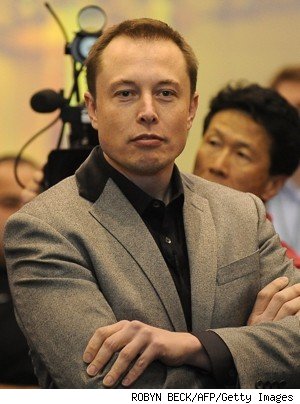 A divorce is a very private thing, except of course when it isn’t. And an employee’s (or executive’s) private struggles are, well, private — except when various kinds of business analysts start taking notice of those struggles.
Case in point: the bitter lawsuit over the terms of the difficult divorce of Elon Musk, one of the co-founders of PayPal and current CEO of Tesla Motors. For an outline of why the divorce resulted in a lawsuit, see this blog entry, by Jeanette Bicknell: Challenge to Confidentiality in Mediation? Basically, Musk’s ex-wife, Justine, is challenging the terms of the divorce settlement, and it looks likely to be a long, drawn out court battle.
The whole thing is a sad event for the former couple (and their 5 children) but it is also presenting problems for at least one of Mr. Musk’s companies, Tesla. See this piece from auto-industry website FutureCars: Could Elon Musk’s Divorce Affect Tesla’s IPO?
Sources are saying that the upcoming Tesla Initial Public Offering will be for between $1 and $1.5 billion or $10-$12/share, but all of this could be in jeopardy because of CEO Elon Musk’s pending divorce.
So the problem here is more than just the worry that an ugly personal battle is. And it’s not just the worry that Musk’s personal issues are a distraction from his management duties, though that has been suggested. No, according to the FutureCars story, Musk’s bitter divorce could have very serious implications for Tesla Motors, particularly if the court decides that Mr. Musk has to give some of his stock portfolio to his ex-wife:
If [Musk] did lose a large shareholding, that would default Tesla’s recent Department of Energy loan and could cause the S-1 filing for IPO to go in the round file….
So, the question for discussion: do investors in Tesla have the right to tell Mr. Musk to get on with it and settle the lawsuit with his ex-wife? Are investors (or employees, for that matter) essentially stakeholders in the Musk vs Musk court battle? Or is that an entirely personal matter, and none of investors’ business?
—
p.s., for those of you worried more about Mr. Musk’s emotional state than the financial well-being of his companies, fear not: he just recently celebrated his marriage to Hollywood starlet Talulah Riley.
Tools for Corporate Funding of Elections
Filed under: accountability, corporations, personhood, politics, stakeholders |
Comments (5)  What sorts of things are corporations — and charities and associations and churches and unions and so on? Should we think of such organizations as things that are themselves capable of taking action, or should we think of them as tools that people use when they want to take action?
Case in point: the controversial organizations discussed in this recent NYT editorial, The Secret Election:
…the most disturbing story of this year’s election is embodied in an odd combination of numbers and letters: 501(c)(4). That is the legal designation for the advocacy committees that are sucking in many millions of anonymous corporate dollars, making this the most secretive election cycle since the Watergate years….
Now, recall that, in the wake of the U.S. Supreme Court’s Citizens United decision, all the talk was about the notion of corporate personhood — despite the fact that the majority decision made only passing reference to the concept. (See my blog entry here.) But notice that there’s no reference to corporate or organizational personhood in the NYT editorial. It’s simply not at issue. What’s at issue is the use of organizations as a certain kind mechanism, or tool. Note that, according to the NYT, interested corporations are using 501(c)(4) organizations as a conduit, with a court-sanctioned secrecy shield. The question here isn’t so much what the 501(c)(4)’s are doing, but what they are being used for.
I think that difference in perspective — between thinking of organizations as agents and thinking of organizations as tools — is worth taking seriously. Now, to be clear, I don’t think it makes sense to say that one or the other of those perspectives is the right one, for all cases. I strongly suspect there are cases where each makes sense. Clearly there are differences, and each will highlight certain aspects of a situation at the expense of others.
For example: focusing on the organization’s capacities as an agent (or quasi-agent, if you like) allows us to consider the possibility that the organization, as a whole, is deserving of punishment for wrongs that result from its actions; but it can obscure the interests and motives of the people behind the organization. (In the present case, if we focus on the personhood and/or rights of the 501(c)(4)’s, we might be distracted from crucial questions about the political motives of the people making use of them. On the other hand, focusing on the organization’s instrumental nature can obscure the complicated ways in which organizations transform and sometimes mistranslate the intentions of the individuals behind them. But it can also facilitate an engineering perspective on organizations, one that allows us to think about how the organization — as a complex mechanism — can be taken apart, re-engineered, and put back together again. So, in the present case, thinking about the 501(c)(4)’s as mechanisms allows us more readily to consider which of the legally-constituted features of 501(c)(4)’s are serving useful functions, and which (if any) ought to be re-engineered.
Now, I’ve argued before that there are certain purposes for which we simply must regard corporations as persons — as particular kinds of agents (“must” because important goals that we all endorse would be impossible to achieve otherwise). But when it comes to particular instances of ethical assessment of a corporation or other kind of organization, we should ask ourselves: is this one of the cases where it’s useful to think of the corporation as an agent, or is this one of the cases where it’s useful to think of the corporation as an instrument? Or are there other ways of framing the issues that serve us better still?
BP and Corporate Social Responsibility
Filed under: consumers, corporations, CSR, energy, environment, honesty, shareholders, stakeholders |
Comments (12) I’ve long been critical of the term “CSR” — Corporate Social Responsibility. (See for example my series of blog postings culminating in my claim that “CSR is Not C-S-R”.) Too many people use the term “CSR” when they actually want to talk about basic business ethics issues like honesty or product safety or workplace health and safety — things that are not, in any clear way at least, matters of a company’s social responsibilities.
But the BP oil spill raises genuine CSR questions — it’s very much a question of corporate, social, responsibility.
BP is in the business of finding oil, refining it, and selling the gas (and propane, etc.) that results. In the course of doing business, BP interacts with a huge range of individuals and organizations, and those interactions bring with them ethical obligations. Basic ethical obligations in such a business would include things like:
a) providing customers with the product they’re expecting (rather than one adulterated with water, for example),
b) dealing honestly with suppliers,
c) ensuring reasonable levels of workplace health and safety,
d) making an honest effort to build long-term share value,
e) complying with environmental laws and industry best practices, and so on.
Most of those obligations are obligations to identifiable individuals (customers, employees, shareholders, etc.). There’s nothing really “social” about those obligations (with the possible exception of compliance with law, which might better be categorized as an obligation of corporate citizenship, or more directly an environmental obligation). And it’s entirely possible that BP, in the weeks leading up to the spill, met most of those ethical obligations. The exception, of course, is workplace health and safety — 11 workers were killed in the Deepwater Horizon blowout. But even had no one been killed or even hurt during the blowout, a question of social responsibility would remain.
So, what makes the oil spill a matter of social responsibility? Precisely the fact that the risks (and eventual negative impacts) of BP’s deep-water drilling operations are borne by society at large. The spill has resulted in enormous negative externalities — negative effects on people who weren’t involved economically with BP, and who didn’t consent (at least not directly) to bear the risks of the company’s operations.
Now, all (yes all) production processes involve externalities. All businesses emit some pollution (directly or indirectly via the things they consume) and impose some risks on non-consenting third parties. So the question of CSR has to do with the extent to which a company is responsible for those effects, and (maybe) the extent to which companies have an obligation not just to avoid social harms (or risks) but to contribute socially (beyond making a product people value). From a CSR point of view, then, the question with regard to BP is whether the risks taken were reasonable. Most of us would say “no.” But then most of us still want plentiful cheap gas.
Thus the BP oil spill provides an excellent way to illustrate the way we should understand the scope of the term “corporate social responsibility,” and how to keep that term narrow enough for it to retain some real meaning.
———-
p.s., here are a few relevant bits of reading:
1) Did you know that, in 2005, BP made it onto the Global 100 list of the “Most Sustainable Companies in the World”, a feat the company repeated in 2006. (And yes, that’s a reason to be skeptical about such rankings!)
2) See also this bit on Which is the Most Ethical Oil Company?
3) And finally here is BP’s own take on CSR, from 2002, see this speech: The boundaries of corporate social responsibility
———-
Addendum:
Here are a few books on ethics & CSR in the oil industry. No endorsement is implied.
- Drowning in Oil: BP & the Reckless Pursuit of Profit
- Corporate Social Responsibility Failures in the Oil Industry
- Price of Oil: Corporate Responsibility and Human Rights Violations in Nigeria’s Oil Producing Communities
- The Tyranny of Oil: The World’s Most Powerful Industry–and What We Must Do to Stop It



 The Business Ethics Blog