The Virtues of Local Ownership
Filed under: accountability, corporations, CSR, decision-making, entrepreneur, governance, retail, shareholders, SME, stakeholders, values |
 Leave a Comment
 There’s plenty in the news these days about the supposed virtues of “buying local.” Buying local usually means buying from small businesses. As I’ve argued before, in at least some cases buying local also means opting for small-scale, inefficient production processes. And in other cases, it means an unhealthy kind of insulation from the outside world.
But what about the virtues of specifically local ownership, when the ownership in question is ownership of what is otherwise a standard-issue department store, replete with goods ‘Made in China,’ as the stereotype goes?
The New York Times recently reported on an effort by a small town in upstate New York to ensure its residents have access to some sort of local department store. When the local Ames department store went out of business a few years back, residents of Saranac Lake — pop. 5,041 — took matters into their own hands. They raised the capital, at $100/share, to open their own department store.
It’s a charming story, and an interesting experiment, but we ought to exercise some caution before attaching too much significance to it.
First, it will be tempting to see this as radical re-visioning of modern capitalism. To see examples of such a temptation, see the 2004 Avi Lewis and Naomi Klein documentary, The Take, about the takeover of a defunct Argentinian factory by its former employees. Lewis and Klein portray that takeover as an example of the pursuit of a real alternative to capitalism — despite the fact that the cooperatively-run factory is still buying inputs on the open market, selling goods on the open market, and so on.
Were it not for movies like The Take, it might go without saying that innovations in ownership structure don’t eliminate the fundamental challenges of capitalism, and certainly don’t eliminate the standard ethical issues that face all businesses. The department store in Saranac Lake is — setting aside a few nods to local sourcing — just a regular department store. It’s got employees, so it will face questions about how those employees are treated. It’s smaller than your typical Walmart, but it will still face questions (or at least it should) about where its products come from, the conditions under which they’re manufactured, and so on. And its managers will still face questions about how to balance the good of the community as a whole with their obligation to be fiscally responsible. And so on.
Not that we need to be entirely cynical about the Saranac Lake experiment, and others like it. There’s at least a prima facie case to make for the significance of local ownership. Managers of a locally-owned store have at least some sense of what kinds of things shareholders would want them to do, and hence seem less likely to violate the trust placed in them. When you know your shareholders by name, you can ask them what they want, and they can tell you what obligations they feel to the community, and they can then ask you, their representative, to make good on those obligations.
In the end, I think experiments in capitalism are good. Indeed, the way it fosters experimentation is one of the great virtues of capitalism. We ought to keep a careful eye on such experiments, both for what we can learn about their particular virtues, and for what we can learn about the nature and structure of capitalism more generally.
An Inside Trader’s $92.8m Fine: What’s the Point?
Filed under: accountability, corruption, crime, fraud, regulations, scandal, white collar crime |
Leave a Comment What is it that justifies the record-breaking $92.8m fine slapped on Raj Rajaratnam by the US Securities and Exchange Commission?
I’m not posing this question skeptically. That is, I don’t particularly doubt the fairness of the fine. But it’s still useful to ask what reasons lie behind particular instances of punishment, particularly when those punishments are record-breakers like this one.
It’s worth noting that Rajaratnam is also going to jail, as a result of a separate criminal proceeding related to the same wrongdoing. But let’s focus just on the monetary judgement issued as a result of the SEC’s civil case. There are at least 4 possible justifications for punishment by means of a fine.
1) Deterrence. Sometimes we punish in order to make the offender less likely to re-offend, or to set an example for others who might otherwise have been tempted to commit similar crimes.
2) Restoration. Sometimes a financial penalty can be used to “make whole” the parties harmed by the wrongdoer. This, of course, would require that (some of) the fine actually be given to those who lost out due to Rajaratnam’s hijinks. As far as I know, that’s not going to happen. But then, there’s a sense in which society as a whole loses out when someone violates market norms as aggressively as Rajaratnam did. So maybe American society is the ‘victim,’ here, and is being compensated through its representative, the SEC.
3) Retribution. The fine might just amount to imposing pain on a roughly eye-for-an-eye basis. From this kind of point of view, the goal isn’t to achieve any particular outcomes (like, say, deterring wrongdoing) but rather just to ‘get even’ with the wrongdoer. Retribution is rooted in some pretty primitive (and, frankly, ugly) emotions, but it certainly has its appeal and plenty of defenders.
4) Denunciation. Closely related to retribution, denunciation is essentially the act of saying “No!” in response to crime. From this point of view, a big fine is a way of saying, loud and clear, that the kind of behaviour in which Rajaratnam engaged is simply not OK in our society.
What does the SEC say?
“The penalty imposed today reflects the historic proportions of Raj Rajaratnam’s illegal conduct and its impact on the integrity of our markets,” said Robert Khuzami, Director of the SEC’s Division of Enforcement.
OK, that helps. But let’s get it from the horse’s mouth. Let’s look at the words of the judge. According to Judge Jed S Rakoff,
“S.E.C. civil penalties, most especially in a case involving such lucrative misconduct as insider trading, are designed, most importantly, to make such unlawful trading a money-losing proposition not just for this defendant, but for all who would consider it.” He added that it was a warning that, if caught, “you are going to pay severely in monetary terms.”
So there you have it. The rationale behind the historic fine is deterrence. The fine was a warning to others. Of course, the fact that deterrence was the goal doesn’t mean that the fine is actually going to deter anything, or that the outsized fine is going to be more effective in that regard than a more modest fine would have been. Does anyone seriously think that a $92.8m fine is going to work where a $50m fine would not have?
But anyway, the problem here is liable to be the same as that faced in trying to deter street crime, which is that no one expects to get caught. That’s likely to be doubly true of a man like Rajaratnam. After all, he was a Wall Street titan, a self-made billionaire. He was — to steal a phrase from Enron’s Jeff Skilling — the ‘smartest guy in the room.’ How could a man like that even imagine being caught by the mere mortals at the SEC and FBI? The result is that deterrence may well be futile. So what we really need is for our markets and regulatory agencies to be designed with the full expectation that, every once in a while there’s going to be a Raj Rajaratnam. We need institutions to put safeguards in place, precisely to deal with the inevitable lapses in conscience and lapses in our belief in our own fallibility.
Moneyball and Business Ethics
Filed under: books, complexity, critical thinking, decision-making, ethics, management, reporting, strategy |
Comments (1) 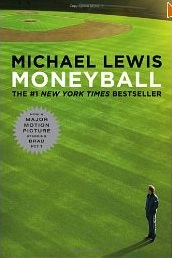 I’m finally getting around to reading Moneyball, Michael Lewis’s best-selling ode to the study of baseball statistics (and the source material for the new Brad Pitt movie of the same name). It’s one of the most engaging books I’ve read in a long time — something that won’t surprise those of you who happen to have read The Big Short, Lewis’s lively account of the 2008-2009 financial collapse.
What did surprise me as that Moneyball isn’t really a book about baseball. It’s fundamentally about epistemology. Epistemology is the critical study of knowledge itself — how we get it and how we use it. And though Lewis doesn’t (as far as I can recall) use that word, Moneyball is all about epistemology: the epistemology of baseball, yes, but much more than that. It’s fundamentally about how managers should use information to achieve better outcomes.
Moneyball holds important lessons for business managers generally, but in particular it holds lessons about business ethics. But the messages aren’t the obvious ones you’d expect from a book on baseball — they aren’t about the ethics of labour negotiations, for example, or the incomplete alignment of the twin goals of satisfying your fans and making money.
Three key lessons of the book, as far as I can see, are as follows:
1) The numbers matter. So, don’t guess — measure. In baseball, this means scouts need to look closely at a player’s stats, rather than relying on the fact that he’s got a “nice swing” or a “body made for baseball.” In business, it means measuring actual performance — not just bottom-line financial performance, but social and environmental performance, too, rather than just relying on the vague feeling that your company is “doing OK.”
2) The numbers don’t come out of thin air. The numbers you have available to you aren’t just a feature of the universe around you. The numbers represent what happens to have been measured. The “bottom line” (net income) is no more a natural feature of business than “Earned Run Average” is a natural feature of baseball. Both are artefacts of a particular system, one with a particular history and its own set of biases.
3) Numbers can lead you astray. Managing based on the numbers someone else more-or-less arbitrarily decided to keep track of can result in disaster. This is especially the case when those decisions are rooted in idiosyncratic interests or biases. Lewis points out, for instance, that early baseball stats didn’t bother to record the number of walks a batter earned — mostly because one of the early promoters of baseball stats, a journalist named Henry Chadwick, happened to be a fan of cricket, a sport where there’s just no such thing as a ‘walk.’ Chadwick decided not to keep track of how many walks a batter achieved. The result was that there was no way to track which batters had the good judgment to watch a high-and-inside fastball sail past instead of swinging at it. It matters to their performance, but for a time there was no way for coaches to include it in their management strategies. The exact same point can be made about various elements of social and environmental reporting.
The overarching lesson, here, is about the need for (pardon the pun) a measured approach to the use of numbers in business. Numbers matter, and they matter a lot. The old saw that “you can’t manage what you can’t measure” is surely a vast overgeneralization, but one that contains a kernel of truth. But what matters even more than the numbers is knowing what the numbers mean, and what they can and cannot tell you.
Greed, Capitalism, and the Occupy Movement
What’s wrong with greed, anyway? No, don’t worry, this isn’t going to be one of those ill-conceived “greed is what makes capitalism work” diatribes. After all — with apologies to Gordon Gekko — that’s nonsense. Greed isn’t what makes capitalism work. Self-interest and ambition, maybe. But not greed.
Greed, after all, is the unseemly and excessive love of money, a desire for more than your share. And that is neither necessary nor sufficient for the operation of our economic system. None the less, there are many who believe that greed is not just an enemy, but the enemy.
Canadian pundit Rex Murphy recently argued that if greed is the enemy, then the Occupy movement should forget Wall Street, and instead Occupy Hollywood. After all, he argued, if you’re looking for greed, the best examples aren’t bankers, but rather the actors and producers and miscellaneous talentless celebrities who gleefully rake in millions in La La Land for doing next to nothing.
It’s hard to know what to make of Murphy’s argument. The simplest interpretation is that it’s a grenade lobbed over the wall of the culture war. Stop bothering the hard-working bankers, you Occupiers! Go pester the makers of low-brow entertainment.
More likely is that Murphy is doing something one step cleverer than that. By taking aim at celebrities, he’s telling “the 99%” to rue the wealth of the monsters they themselves have created. Kim Kardashian, after all, is astonishingly wealthy only because an astonishing number of people have paid to see her hijinks. But — and this, I think, must be Murphy’s unstated punchline — the same generally goes for the wealthy on Wall Street. They got wealthy because a whole lot of people each found a little bit of use for their services. And a whole lot, multiplied by a little bit, can be billions of dollars. True, some on Wall Street have multiplied their earnings through corrupt means. But the basic mechanism of wealth aggregation is the same, whether on Wall Street or in the Hollywood Hills.
OK, back to greed. Where Murphy goes astray is in his focus on that particular vice. Vast wealth is a feature of the stories of both Hollywood and Wall Street, but the role of greed in generating such wealth is very much in question. After all, being handed a million dollars doesn’t make you greedy. Even asking for a million dollars doesn’t make you greedy, when the pile on the table is much larger than that and when everyone in a similar situation is asking for a similar amount.
No, greed isn’t the problem. Greed isn’t what makes capitalism work, but nor is it typically the culprit when capitalism goes astray. The real problem isn’t greed, but rather institutional structures that reward antisocial behaviour. Which structures? Well, that depends on which particular antisocial behaviour you’re talking about. And that’s precisely where the Occupy movement faces its greatest challenge. You can’t plausibly take aim at a hundred different social ills and presume to find the cause of them all in the single word “greed.”
Walmart, CSR Reporting, and Moral Grey Zones
Filed under: accountability, CSR, reporting, transparency, values |
Comments (2) It’s very hard to report on the good things you’ve done, when not everyone is sure that those things are actually good. Cutting CO2 emissions is pretty unambiguously good, as is working to reduce fire hazards in your suppliers’ factories. But in the realm of corporate responsibility reporting, there’s still lots of room for controversy.
Case in point: I recently had the chance to indulge in a careful reading of Walmart Canada’s 2011 Corporate Social Responsibility Report. Here’s a bit from the document’s intro, by CEO David Cheesewright:
We see this report as a powerful tool for corporate good. Our size gives us considerable influence and with it comes considerable responsibility – a role we embrace in order to help Canadians save money and live better.
Our goal is to present an open look into the impact of our operations in Canada over the past year. This latest report frames our diverse activities into four broad categories of CSR: Environment, People, Ethical Sourcing and Community.
In each area, we highlight our efforts and actions, both large and small – and summarize our current programs and challenges while outlining plans to keep improving in the future….
It’s a very readable 35-page document (more reader-friendly than some others I’ve read, which I think is really crucial if you want people actually to read the thing.)
One of the things that struck me about the Report is that there’s a genuine difficulty in reporting on this sort of stuff in a world replete with grey areas. There’s lots of lovely win-win stuff in the Report. But some of the stuff reported proudly is actually ethically controversial. A trio of examples will illustrate my point.
- Under the heading of “Community,” Walmart Canada proudly reports that “Walmart Canada thinks locally,” and that the retail giant does a lot to boost the prospects of Canadian businesses, to whom it funnelled just over $15 billion in 2010. This goes some distance toward countering a common criticism. But as I’ve pointed out here before, a focus on “supporting Canadian business” is often a mistake, both economically and ethically.
- Likewise, the Report indicates that their ‘Standards for Suppliers’ absolutely forbid the use of child labour. But there’s a good argument to be made that in at least some desperate parts of the world, child labour is a sad necessity. An absolute prohibition can make some kids’ lives worse.
- The Report also brags about its new line of organic baby food, despite the fact that there’s little clear evidence that organic foods are ethically better than other foods. The question is controversial, to say the least.
In all three cases, the company is portraying as ‘socially responsible’ something that, well, might or might not be, depending who you ask. But of course, child labour, healthy foods, and impact on local communities are precisely the sorts of things that critics (and maybe consumers more generally) want to hear about from Walmart. So it’s hard to fault them on doing, and reporting on, those things.
The point here really is not about Walmart Canada, but about the challenges of CSR reporting more generally. If CSR reports stuck to the unambiguously-great stuff, the reports would be vanishingly short and only minimally useful. And that would be a shame. The point of such reporting, I think is not to show that you’re doing everything right. It’s to show us what you’re doing.
Why $100-million Is Too Much
Filed under: accountability, boards, CEOs, compensation, corporations, energy, governance |
Comments (3) It was widely reported yesterday that former CEO of Nabors Industries Ltd., Gene Isenberg, will be the recipient of a $100 million severance payment. Except, he’s not leaving the company — he’s staying on as Chairman of the Board. Confusion and criticism has ensued.
For the most part, I think that executive compensation, even outlandish executive compensation, is in principle a private matter. If a bunch of shareholders want to pay their CEO a gazillion dollars — whether because they think he’s the one guy who can build long-term value or because they just think he’s a swell guy — well, that’s none of my business. I may think those shareholders are fools, or spendthrifts. But there’s little reason for me to be morally concerned. I don’t tell you how much to spend on your babysitter or your dry cleaning or your car. And I shouldn’t tell you how much to spend on your CEO.
In principle.
But two factors get in the way of applying my in-principle argument to the present case.
One factor begins with the observation that shareholders don’t, in fact, generally make the decisions regarding how much total compensation the CEO gets. That task is delegated to the Board of Directors, who in turn generally delegate it to their Compensation Committee. Now again, in principle, this is purely a private matter. If the Board isn’t serving the shareholders well, the shareholders have cause to complain, and (yet again, in principle) they can always fire the Board if they feel sufficiently poorly served. But we have ample evidence that shareholders very often aren’t well-served by boards. Add to that the fact that proper functioning of corporate governance (and hence of capital markets) is clearly a matter of public concern, and you have at least the beginnings of a public-interest argument for interference in what would otherwise be a private matter.
The other reason why excessive pay isn’t always a purely private matter has to do with the government’s (i.e., the public’s) role (and support of) an industry. Note, for example, that Nabors is an oil-drilling contractor. So the $100 million that Isenberg is getting isn’t merely a share of privately-gained profits. It’s a share of the profits from a heavily-subsidized industry.
So boards of directors do have some public obligations related to how they choose to compensate executives (even if, as I’ve argued before, outsized compensation isn’t automatically unfair). Corporate directors are not just part of private institutions; they’re part of a system justified, in part, by its public benefits. And the more they seek to gain private benefits in the form of subsidies, the greater their obligations to the public become.
Toronto’s Mayor in Pocket-Sized Conflict of Interest
Filed under: conflict of interest, corruption, government, transparency |
Comments (6) The Toronto Star recently reported that the city’s beleaguered Mayor, Rob Ford has stumbled yet again. The Mayor, it seems, opted not to use the city’s standard (cheap) method of having business cards printed. He opted, instead, to go his own route. That might not be surprising a surprising move, coming from a maverick mayor, except for two facts. One is that his way cost a fair bit more. The other is that his way meant giving the contract to his own family’s printing business.
Three additional points are worth making.
First, this is an actual, bona fide conflict of interest. The Star reports City Councillor Josh Matlow as being critical of Ford’s decision, and wondering if the decision carried the risk of “a perceived conflict of interest”. Perhaps Matlow was pulling his punches, attempting to be collegial. But the term “perceived conflict of interest” is properly reserved for situations in which the concerned observers might understandably but wrongly think that the decision-maker had an external interest that could have influenced his decision-making, perhaps because outsiders are misinformed about who was responsible for what decisions.
Second, as always, it’s important to differentiate conflict of interest from corruption. The term “corruption” implies a level of intentionality not required to establish conflict of interest. You can be in a conflict of interest through no fault of your own. Whether there was fault, in the present case, is for voters (and quite possibly the city’s city’s integrity commissioner) to decide.
Finally, it must be acknowledged that the dollar amounts here are pretty small. The total cost of the business cards Ford ordered is just a tad over $1500. Compared to the city’s budget, or even just the budget for the Mayor’s Office, that’s pocket change. But one thing that corruption and conflict of interest share in common is that size isn’t always the issue. What’s at issue in conflict of interest is the need to protect the integrity of the institution, and in particular the way key stakeholders perceive its decision-making processes. Whether in business or in public office, it is crucial not just that top executives make the right decisions, but that they be seen as making decisions on the right basis.
Banks, Image Problems, and the Ethics of Lobbying
Filed under: banking, brands, CEOs, lobbying, public relations, transparency |
Comments (1) Ethics in public relations can mean two different things. It can mean managing your firm’s reputation, since a reputation for ethical behaviour is of course a central part of the reputation that any company wants for itself. It can also mean ethics in the way you go about managing that reputation, since there are good and bad ways to do that. Sometimes the two go hand-in-hand.
Businessweek recently reported that Brian T. Moynihan, CEO of Bank of America, has said he is “incensed” at public criticism of his bank, and has called upon 135 ‘market presidents’ (presidents of local business units) to lobby local officials and remind them of how much good the bank does for local communities. Call it reputation management, call it lobbying. Either way, it’s not at all clear that it is a good substitute for changing the practices that have been angering critics in the first place. It’s also not clear that a focus on ‘all the good we do’ is the right approach. Why not tackle the issues head-on?
Yesterday, at Canadian Business for Social Responsibility’s annual Forum, I got the chance to ask keynote speaker Stephen Lewis about the ethics of lobbying. (Lewis, in addition to being a former diplomat and a UN special envoy is also a former parliamentarian, so he seemed a good person to ask.) Lewis said that, in his experience — both as a parliamentarian and as someone who has lobbied hard on behalf of many causes — the best approach to lobbying is honesty. Put your agenda on the table, he said, and you’re likely to get a fair hearing.
That rings true, especially in an era in which just about everyone is cynical about corporate motives. Even people who believe fully in the crucial role that business plays in making the world a better place — and yes, that includes banks — are likely to respect you more if you admit that you’ve got an agenda, and that that agenda is not, and properly is not, direct pursuit of the public good.
Ice Cream, OxyContin, and the 3 Big Questions of Business Ethics
Filed under: crime, ethics, markets, philanthropy, pricing, regulations, values |
Comments (1)  Sometimes it takes a really minor story to illuminate the basic issues at stake in business ethics. Like, for instance, a recent story about a guy selling both ice cream and serious street drugs out of his New York city ice cream truck. Here’s the story, by Jonathan Allen for Reuters: Ice cream vendor gets prison for selling drugs with treats.
That story highlights nicely one of three really fundamental questions that must be asked by anyone seriously interested in business ethics.
The three big questions of business ethics are as follows:
- 1) What may I do, and what may I not do, in attempting to make a living?
- 2) In what ways do my obligations change when I act on behalf of others, including employers, shareholders, etc.?
- 3) What should I do when I see inappropriate business practices that don’t directly affect me?
Each of these “big” questions can of course be subdivided into an entire category of questions. Question 1, for instance, implies a whole range of more specific questions — not just questions about the basic ethics of commerce (Can I lie, cheat or steal? No. Can I exaggerate, or put important details in fine print? Not so clear!) but also questions about Corporate Social Responsibility and corporate philanthropy. The second question covers all the issues that crop up once businesses are staffed by more than a single individual. And the third concerns third-party critique, the work of consumer advocates, and government regulation.
The news story cited above illustrates beautifully Question 1, the question of what you can and cannot do to make a dollar. Louis Scala was, after all, just trying to make a living. There’s nothing wrong with that, of course. The catch was the method he chose.
Scala chose to sell two products. One was soft-serve ice cream, a dessert treat sold primarily to kids, who just can’t get enough of the stuff. The other was OxyContin, a highly-addictive narcotic, sold primarily to adults who just can’t get enough of the stuff. Selling the former is considered a reputable way to make a living. Selling the latter (out of the back of a truck!) is what earned Mr. Scala three and a half years in jail. But then, neither of those products is uncontroversial. Ice cream isn’t exactly healthfood, and child obesity rates are on the rise. But on the other hand, it’s a harmless treat, when consumed in moderation. But on the other hand, it’s not always consumed in moderation. But on the other hand…you get the point.
Figuring out what constitutes a legitimate way to make a living — taking into consideration all reasonable details — is far from straightforward. But realizing that the questions we want to ask about business ethics all fall under one or another of the fundamental headings listed above is, I think, a useful bit of mental bookkeeping, which is increasingly important in a world where criticisms, and defences, of business practices are becoming more and more diverse.
Should Americans Buy American?
Filed under: activism, consumers, critical thinking, economics, trade |
Comments (2) One of the most amazing — and perhaps depressing — facts of current American politics is that the Occupy Wall Street folks and the American political right are apparently unified in their support for a “buy American” policy. The need to appease the political right is reportedly the entire reason for the “buy American” provision in Obama’s new jobs bill. The very same sentiment is embodied in the recent 99 Percent Declaration. (See Point #14: “End Outsourcing.”)
The “buy American” thing is just a special case of the more general plea we often hear to “support your local economy.” But maybe even less well-justified. And more cynical.
There are plenty of reasons to worry about the “buy American” slogan. For a start, it’s the slogan for the kind of protectionism that is generally understood to reduce economic efficiency (and hence to reduce human well-being). Bigger markets are generally better, and the right solution to the negative side-effects of globalization isn’t to build walls around your economy. Plus, protectionism tends to result in arms races, in which Country A erects trade barriers, to which Country B responds, and so on and so on. And in some cases, “buy American” (or “buy Canadian” or “buy UK” or whatever) is a thin disguise for xenophobia, and perhaps racism. As in, “Buy American rather than from…you know…foreigners.”
But the flip-side of the consumer-oriented question posed in the title of this entry is the question faced by businesses (and this is, after all, a blog about business ethics.) Should businesses play into the protectionism implied by the “Buy American” slogan? As I’ve pointed out before, one of the most general obligations businesses have is not to reduce the efficiency of markets, for it is that very market efficiency that provides the moral underpinning for their general pattern of aggressively competitive behaviour. So businesses generally have a responsibility not to play upon consumers’ lack of economic sophistication, or their xenophobia. So, on the lips of a captain of industry, “buy American” betrays either a lack of understanding, or a cynical willingness to damage the public good in order to turn a profit. What it betokens on the lips of politicians or protestors, I leave for others to speculate.